Why 73% of Small Businesses Now Use AI for Customer Service
New data reveals how AI customer service transformed small business operations in 2026. Learn what's driving adoption and practical implementation tips.
Why 73% of Small Businesses Now Use AI for Customer Service
Two years ago, AI customer service was the domain of Fortune 500 companies with massive tech budgets. Fast forward to March 2026, and 73% of small businesses now use some form of AI to handle customer interactions, according to new research from the Small Business Technology Institute.
This isn't just about chatbots anymore. The landscape has shifted dramatically, and the businesses adapting fastest are seeing real competitive advantages.
The Numbers That Changed Everything
The SBTI's quarterly report dropped some eye-opening statistics:
But here's what's really interesting: this isn't being driven by tech-savvy millennials. The fastest-growing segment of AI adopters? Businesses owned by people over 45.
"I was skeptical until I saw my competitor booking clients at midnight while I was losing calls," says Maria Santos, who owns three beauty salons in Phoenix. "Now my AI handles 60% of my scheduling, and I actually sleep better."
What Changed in 2026: The Three Key Shifts
1. Voice AI Became Actually Good
Remember those robotic phone systems that made you want to throw your phone? Those days are over. Modern voice AI can handle complex scheduling scenarios, understand context, and even detect customer frustration to escalate appropriately.
The breakthrough came when AI systems started training on industry-specific conversations rather than generic customer service scripts. A voice AI trained on salon bookings understands "I need a cut and color but not too short" in ways that generic systems never could.
2. Integration Got Simple
The biggest barrier used to be connecting AI tools to existing systems. In 2026, most popular business software platforms offer native AI integrations:
What used to require a developer and weeks of setup now happens with a few clicks.
3. Pricing Became Realistic
Early AI customer service solutions charged per interaction or required massive upfront investments. The market has matured into predictable monthly pricing that small businesses can actually budget for.
Many businesses report spending less on AI customer service than they used to pay for part-time reception coverage.
The Real-World Impact: Four Industries Leading the Charge
Beauty and Wellness
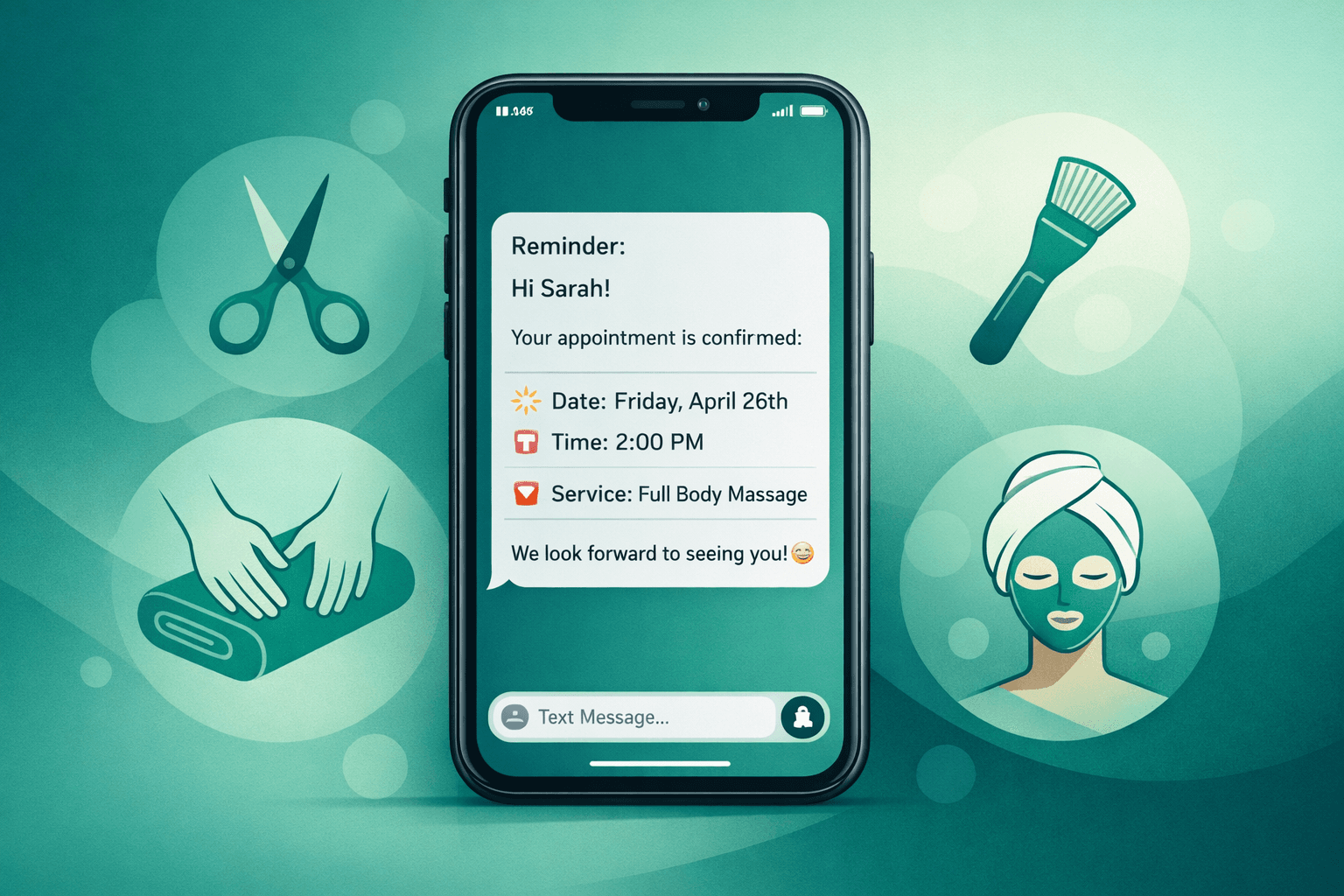
Salons and spas were early adopters because their booking patterns are perfect for AI:
Dr. Jennifer Kim's med spa in Austin saw 42% fewer no-shows after implementing AI appointment confirmations and reminders.
Dental Practices
Dental offices deal with insurance verification, appointment scheduling, and patient follow-ups – all tasks AI handles well. Plus, dental anxiety means many patients prefer not to call during business hours.
"Our AI books 70% of our cleanings and checkups," says Dr. Mike Rodriguez in Denver. "My staff can focus on treatment planning instead of phone tag."
Fitness Studios
Class-based businesses benefit enormously from AI that can handle:
Home Services
Plumbers, electricians, and HVAC companies use AI for initial customer intake, scheduling estimates, and follow-up surveys. The key is handling emergency calls appropriately while managing routine appointments efficiently.
Implementation Reality Check: What Actually Works
After analyzing hundreds of small business AI deployments, here's what separates successful implementations from failures:
Start with One Clear Use Case
Don't try to automate everything at once. Pick your biggest pain point:
Train Your AI on Real Conversations
Generic AI sounds generic. The businesses seeing best results spend time training their systems on actual customer interactions. Record yourself handling typical calls, then use those examples to train your AI's responses.
Plan for Handoffs
Even the best AI needs to pass complex situations to humans. Define clear escalation triggers:
Measure What Matters
Track metrics that align with business goals:
The Competitive Advantage Nobody Talks About
Here's the strategic insight most businesses miss: AI customer service isn't just about efficiency – it's about availability.
Your competitors still close at 6 PM. Your AI works at 11 PM, Saturday morning, and during lunch breaks. In appointment-based businesses, availability equals revenue.
Restaurant owner Carlos Martinez in Miami saw this firsthand: "My AI takes reservations 24/7. Competitors lose Friday night bookings because people can't call during business hours. I capture that demand."
Looking Ahead: What to Expect by End of 2026
The AI customer service space is moving fast. Here's what industry experts predict for the rest of 2026:
Predictive Scheduling
AI systems will start suggesting optimal appointment times based on historical patterns, weather, and customer preferences. "Your usual Tuesday 3 PM is available, but Thursday 2 PM might work better based on your schedule."
Emotional Intelligence
Voice AI is getting better at reading emotional cues and adjusting responses accordingly. A frustrated customer gets a different conversation flow than an excited new client.
Multi-Language Fluency
Small businesses in diverse communities will benefit from AI that seamlessly switches languages mid-conversation, expanding their addressable market.
The Bottom Line: Adaptation or Stagnation
The 73% adoption rate isn't just a statistic – it's a marker of how quickly business expectations change. Customers now expect:
Businesses that don't adapt risk looking outdated, even if their actual service quality is superior.
The good news? Implementation is easier than ever, costs are reasonable, and the competitive advantage is real. The question isn't whether to implement AI customer service – it's how quickly you can do it effectively.
Companies like Shamrok have made voice AI accessible to businesses of all sizes, proving that you don't need Silicon Valley resources to compete in a digital-first world.
Frequently Asked Questions
How much does AI customer service typically cost for small businesses?
Most small businesses pay between $200-800 per month for AI customer service, depending on call volume and features. This often costs less than hiring part-time reception staff and provides 24/7 coverage.
Will AI customer service work for my specific industry?
AI works best for businesses with predictable customer interactions like appointment scheduling, order taking, or basic information requests. Industries seeing the most success include beauty/wellness, dental, fitness, restaurants, and home services.
How long does it take to set up AI customer service?
With modern platforms, basic setup takes 1-2 weeks including training and testing. The key is starting simple with one use case rather than trying to automate everything at once.
What happens when the AI can't handle a customer request?
Professional AI systems are designed with escalation protocols. When they encounter complex situations or detect customer frustration, they seamlessly transfer to human staff with full context of the conversation.