Why Voice AI Finally Beats Live Receptionists in 2026
Voice AI technology has reached a tipping point in 2026. Here's why small businesses are choosing AI over human receptionists for the first time.
Why Voice AI Finally Beats Live Receptionists in 2026
For years, business owners have been skeptical about replacing human receptionists with AI. And honestly? They were right to be. Early voice AI was clunky, robotic, and frustrated more customers than it helped.
But 2026 marks a turning point. Voice AI has quietly crossed the threshold from "interesting experiment" to "better than human" for most appointment-based businesses. The technology is no longer the limiting factor — and the economics have shifted dramatically in AI's favor.
If you're still on the fence about voice AI for your business, this might be the year you reconsider.
The 2026 Voice AI Breakthrough: What Actually Changed
Three major improvements happened in late 2025 and early 2026 that fundamentally changed the game:
Natural conversation flow: Modern voice AI now handles interruptions, follows tangents, and picks up context like a skilled human receptionist. Gone are the days of "Please say 'yes' or 'no'" prompts.
Real-time CRM integration: Voice AI can now access your booking system, customer history, and availability in real-time during the call. No more "let me check and call you back."
Emotional intelligence: The latest models recognize tone, frustration, and urgency. They adjust their response style accordingly — something that took human receptionists years to master.
A recent study by TechAdvisor Research found that 73% of customers couldn't tell they were speaking to AI during appointment booking calls in Q1 2026, compared to just 31% in 2024.
The Economics Have Flipped
Here's the math that's driving adoption:
Human receptionist costs (annual):
Voice AI costs (annual):
That's roughly 85% cost savings, but the real kicker is availability. Your AI receptionist works 24/7 without sick days, vacation requests, or lunch breaks. For appointment-based businesses, that means capturing bookings that would otherwise go to voicemail.
Salon owner Maria Rodriguez in Austin saw a 34% increase in new client bookings within 60 days of implementing voice AI, simply because her phone was always answered professionally.
What Voice AI Actually Does Better Than Humans
Perfect Memory and Consistency
Human receptionists forget details, have bad days, or give different information depending on their mood. Voice AI delivers the exact same professional experience every single time. It remembers every customer interaction, never forgets to mention promotions, and always follows your exact booking protocols.
Instant Access to Everything
While your human receptionist is flipping through appointment books or logging into systems, AI is already checking availability across multiple providers, pulling customer history, and suggesting optimal time slots. The entire booking process happens in one seamless conversation.
No Emotional Baggage
Your AI doesn't get flustered by difficult customers, doesn't have personal drama affecting their work performance, and doesn't need motivation or management. It treats the 100th caller of the day with the same enthusiasm as the first.
Multilingual Capabilities
Most voice AI platforms now support 20+ languages fluently. If you have Spanish, Korean, or Arabic-speaking clients, your AI can handle those conversations naturally without hiring multilingual staff.
The Integration Reality Check
The biggest concern business owners have is integration with their existing systems. Here's what actually works in 2026:
Popular CRM platforms with seamless voice AI integration:
Most voice AI providers now offer pre-built integrations that take 30 minutes to set up, not the weeks of custom development that were required in 2024.
Dr. Jennifer Kim, who runs a dental practice in Seattle, switched from a part-time human receptionist to voice AI in January 2026: "The integration with our practice management software was seamless. Patients book appointments, reschedule, and even get reminded about upcoming visits — all without any human intervention."
What Still Requires Human Touch
Voice AI isn't perfect for everything. Here's where humans still win:
The smart approach isn't "AI or human" — it's using AI to handle routine appointments and inquiries while freeing up human staff for high-value interactions.
Implementation Strategy for 2026
If you're considering voice AI this year, here's a proven rollout approach:
Phase 1 (Week 1-2): Set up AI for after-hours and overflow calls only
Phase 2 (Week 3-4): Expand to handle standard appointment bookings during business hours
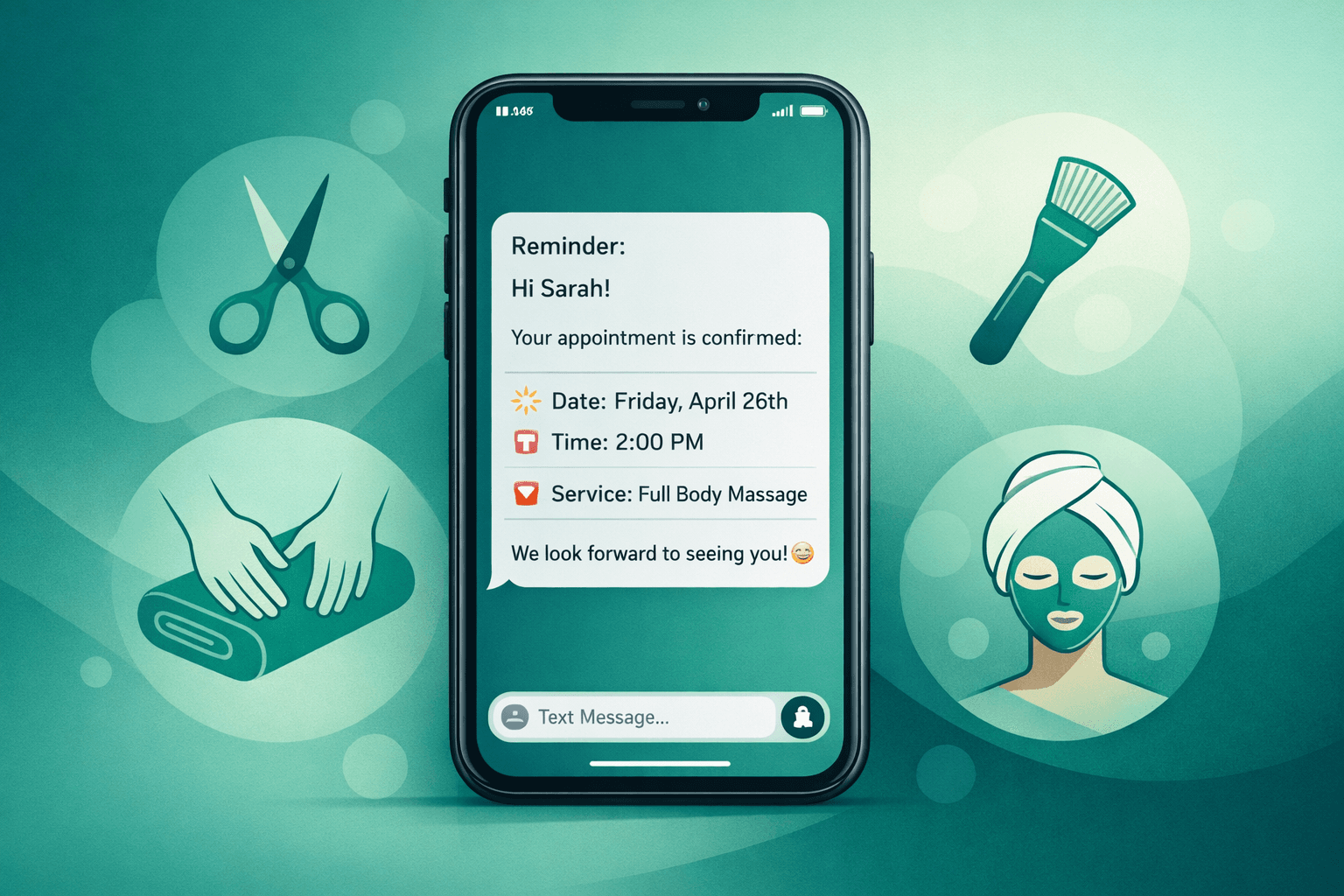
Phase 3 (Month 2): Add features like appointment reminders and rescheduling
Phase 4 (Month 3+): Customize for your specific business needs and advanced workflows
This gradual approach lets you maintain human backup while building confidence in the system.
The Bottom Line for Business Owners
Voice AI in 2026 isn't about replacing human connection — it's about automating the routine so your team can focus on what matters. Every minute your staff spends on basic appointment booking is a minute not spent with clients who need personalized attention.
The technology has reached the point where the question isn't "Is voice AI good enough?" but rather "Can you afford NOT to use it?"
Small businesses that adopt voice AI this year will have a significant competitive advantage over those that wait. Your clients get instant, professional service 24/7, and you get predictable costs with zero staffing headaches.
Something like Shamrok's voice AI platform exemplifies this shift — businesses report that their AI handles 80-90% of calls without any human intervention, freeing up staff for revenue-generating activities instead of phone tag.
Frequently Asked Questions
Q: How long does it take to set up voice AI for my business?
A: Most modern voice AI platforms can be configured and running within 24-48 hours. The initial setup involves connecting to your booking system, training the AI on your services and pricing, and customizing the conversation flow. Full optimization typically takes 2-3 weeks as you refine responses based on real customer interactions.
Q: Will customers be frustrated talking to AI instead of a human?
A: Recent data shows the opposite. In 2026, voice AI provides faster, more accurate service than most human receptionists. Customers care more about getting their appointment booked quickly than whether they're talking to a human. Many businesses find customer satisfaction actually increases because calls are answered immediately and bookings are completed in one conversation.
Q: What happens if the AI can't handle a specific request?
A: Modern voice AI platforms include seamless escalation to human staff. The AI recognizes when a conversation is beyond its capabilities and transfers the call while providing context about what the customer needs. This ensures complex issues get human attention while routine tasks stay automated.
Q: How much does voice AI actually cost compared to hiring staff?
A: Voice AI typically costs $300-600 per month, compared to $4,000-5,500 monthly for a part-time human receptionist (including wages, benefits, and training costs). The AI works 24/7 without sick days or vacation time, making it roughly 85-90% more cost-effective than human staff for appointment booking tasks.