A/B Testing Booking Pages: 5 Elements That Double Conversions
Learn which booking page ab testing elements matter most. Service businesses see 40-60% conversion increases by testing these 5 specific page components.
A/B Testing Booking Pages: 5 Elements That Double Conversions
TL;DR: Most service businesses never test their booking pages, leaving 40-60% more appointments on the table. Five specific elements — service descriptions, booking button copy, time slot display, form length, and social proof placement — drive the biggest conversion lifts when A/B tested properly.
Your booking page gets traffic. Visitors browse your services, check availability, and then... leave without booking. Sound familiar?
Most salon and spa owners assume their booking page "works fine" because some people do book through it. But conversion rate optimization isn't about making a broken page work — it's about making a working page work better.
The service businesses seeing 40-60% booking increases aren't running fancy marketing campaigns. They're systematically testing small changes on their booking pages. Here's exactly what they're testing and why it works.
Why Most Booking Pages Convert Poorly
Service businesses face unique conversion challenges that e-commerce sites don't. Your visitors aren't buying a product they can return — they're committing time, money, and trust to a personal service experience.
The typical booking page conversion rate hovers around 2-4%. Top performers hit 8-12%. The difference isn't traffic quality or pricing. It's systematic optimization.
Booking systems like Vagaro, Boulevard, and Mindbody offer basic customization, but most businesses never touch these settings. Default configurations rarely convert well because they're designed for functionality, not psychology.
Element 1: Service Descriptions That Sell Benefits
Most service descriptions read like internal training manuals: "60-minute Swedish massage using organic oils." Visitors don't book features — they book outcomes.
Test this: Benefits-focused descriptions vs. feature-focused descriptions.
High-converting example:
Implementation tip: A/B test one service at a time. Track which description generates more bookings, then apply the winning format to similar services. Most booking platforms let you edit service descriptions without developer help.
The businesses getting the biggest lifts focus on the post-service feeling rather than the technical process. "Walk out with confidence" converts better than "precision haircut with styling."
Element 2: Booking Button Psychology
"Book Now" buttons convert poorly because they create commitment pressure. Visitors aren't ready to "book" — they're ready to "check availability" or "see times."
Test variations:
What works: Lower-commitment language typically wins. "Check Availability" often outperforms "Book Now" by 25-40% because it feels like the next logical step, not a final decision.
Color testing: Beyond copy, test button colors against your brand palette. High contrast usually wins, but test it. Some spas see better results with calming colors that match their brand than with aggressive orange or red buttons.
Element 3: Time Slot Display Strategy
How you show available appointments dramatically affects booking rates. Too many options create decision paralysis. Too few create scarcity anxiety.
Test these approaches:
Scarcity display: Show only next 3-5 available slots with "Limited availability" messaging
Full calendar: Display 2-3 weeks of availability in calendar format
Time blocks: Group morning/afternoon/evening without specific times initially
Progressive disclosure: Show today and tomorrow, with "See more dates" option
Winner pattern: Most service businesses see highest conversions showing 5-7 specific time slots for the next 3-5 days. Enough choice to feel flexible, not enough to overwhelm.
Advanced tip: If you're using Shamrok or similar voice AI, visitors who call often convert better than online browsers. Track this data to understand whether your booking page complements phone bookings or competes with them.
Element 4: Form Length Optimization
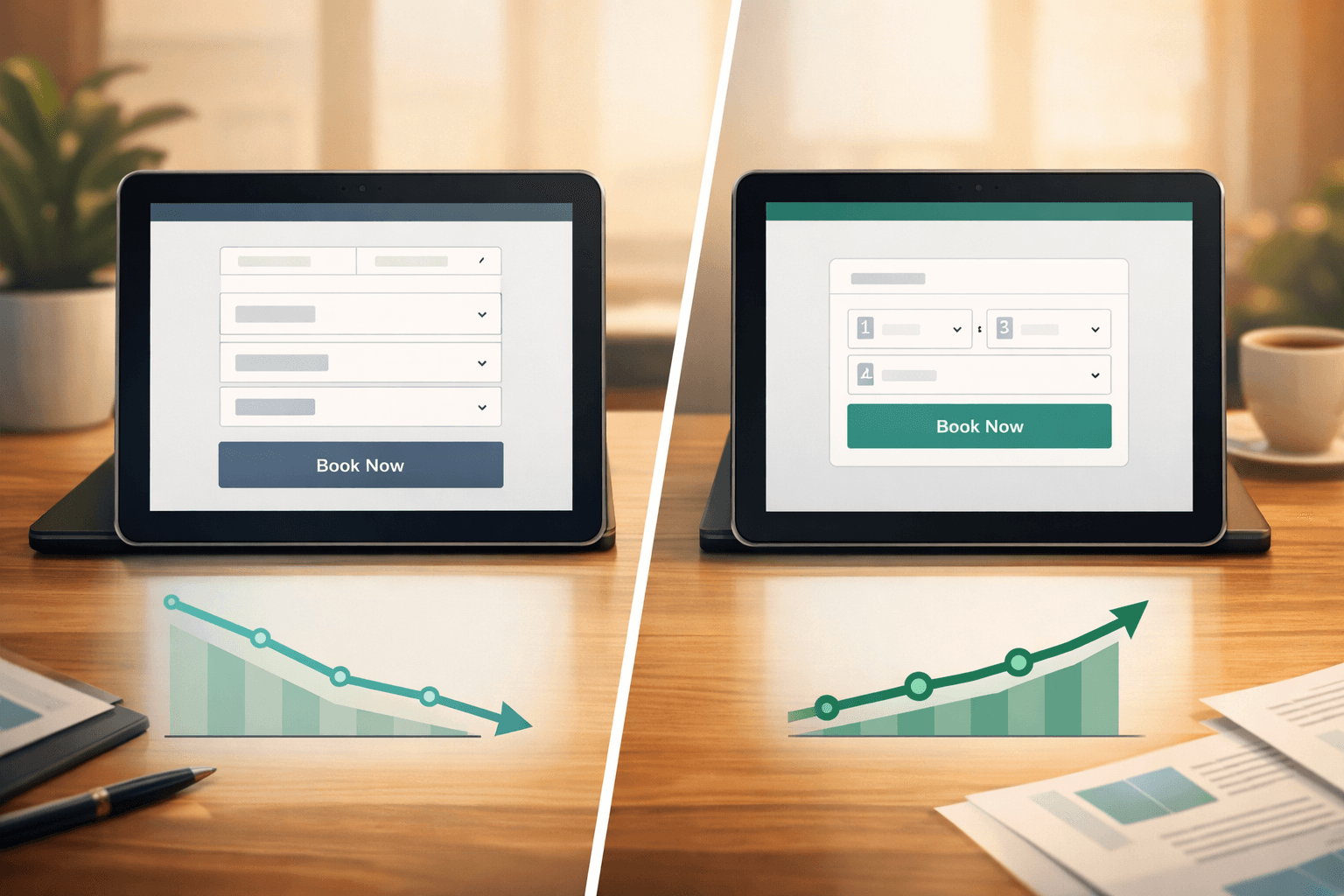
Longer forms collect more customer data but convert fewer visitors. Shorter forms convert better but leave staff unprepared. The sweet spot varies by service type and customer base.
Test these form lengths:
Minimal: Name, phone, email only
Standard: Add service preferences, first-time visitor checkbox
Detailed: Include consultation questions, medical history, special requests
Service-specific strategy:
Progressive profiling: Some businesses test collecting basic info first, then gathering details via email or phone follow-up. This can increase initial conversions while maintaining service quality.
Element 5: Social Proof Placement and Format
Reviews and testimonials boost conversions, but placement and format matter more than quantity. Most businesses dump all their 5-star reviews at the bottom of the page where nobody sees them.
Test these placements:
Format tests:
What typically wins: Service-specific testimonials placed directly below each service description. Generic "Great experience!" reviews don't convert as well as "Sarah transformed my damaged hair" placed under hair services.
Setting Up Your A/B Tests
Most booking platforms don't include built-in A/B testing, but you can still test systematically:
Manual testing: Change one element for 2-4 weeks, measure bookings, then test the next variation. Track conversion rate (bookings ÷ page views) not just total bookings.
Tools that integrate: Google Optimize works with most booking page setups. Hotjar shows how visitors interact with different page versions.
Sample size math: You need at least 100 visitors per variation for meaningful results. Smaller businesses should test one element at a time over longer periods rather than split-testing everything simultaneously.
Key metrics to track:
Implementation Timeline
Week 1-2: Audit current booking page performance and identify highest-impact test
Week 3-6: Test Element 1 (service descriptions)
Week 7-10: Test Element 2 (booking button copy/color)
Week 11-14: Test Element 3 (time slot display)
Week 15-18: Test Element 4 (form length)
Week 19-22: Test Element 5 (social proof placement)
After completing the cycle, test variations of your winning elements or move to advanced tests like pricing display, cancellation policies, or mobile-specific optimizations.
Conclusion
Booking page optimization isn't about revolutionary changes — it's about systematic improvement. The businesses doubling their online conversion rates aren't using secret techniques. They're testing basic elements that most service businesses never touch.
Start with service descriptions and booking button copy. These typically provide the fastest, most noticeable improvements. Then work through time slot display, form optimization, and social proof placement.
Remember: your booking page works with your entire customer acquisition system. Whether visitors find you through Google, social media, or referrals, they all hit the same booking page. Small improvements here amplify every marketing dollar you spend.
FAQ
How long should I run each A/B test?
Run tests for at least 2-4 weeks to account for weekly booking patterns. You need at least 100 visitors per variation for reliable results. Smaller businesses should test longer rather than split traffic more ways.
Which booking platforms support A/B testing?
Most platforms (Vagaro, Boulevard, Mindbody) don't include built-in A/B testing, but you can manually test by changing elements for set periods and tracking results. Google Optimize integrates with most booking page setups for automated testing.
Should I test mobile and desktop versions differently?
Yes. Mobile users often behave differently — they prefer shorter forms, simpler navigation, and click-to-call options. Test mobile-specific elements like thumb-friendly button sizes and simplified service selection.
What's the biggest booking page mistake service businesses make?
Testing too many elements at once. Change one thing at a time, measure results, then move to the next test. This lets you identify which specific changes drive conversions rather than guessing what worked.