Voice AI Cuts No-Shows by 40% in Service Businesses
New 2026 data shows voice AI reduces appointment no-shows by 40% in salons, spas, and clinics. Learn how automated reminders and confirmations are changing service industries.
Voice AI Cuts No-Shows by 40% in Service Businesses
No-shows cost the average salon $12,000 annually. A med spa loses $18,000. For dental practices, the number climbs to $25,000 per year in lost revenue from empty appointment slots.
But new data from early 2026 shows something remarkable: businesses using voice AI for appointment management are seeing no-show rates drop by an average of 40%. That's not just a marginal improvement — it's the kind of change that directly impacts your bottom line.
Why Traditional Reminder Systems Fall Short
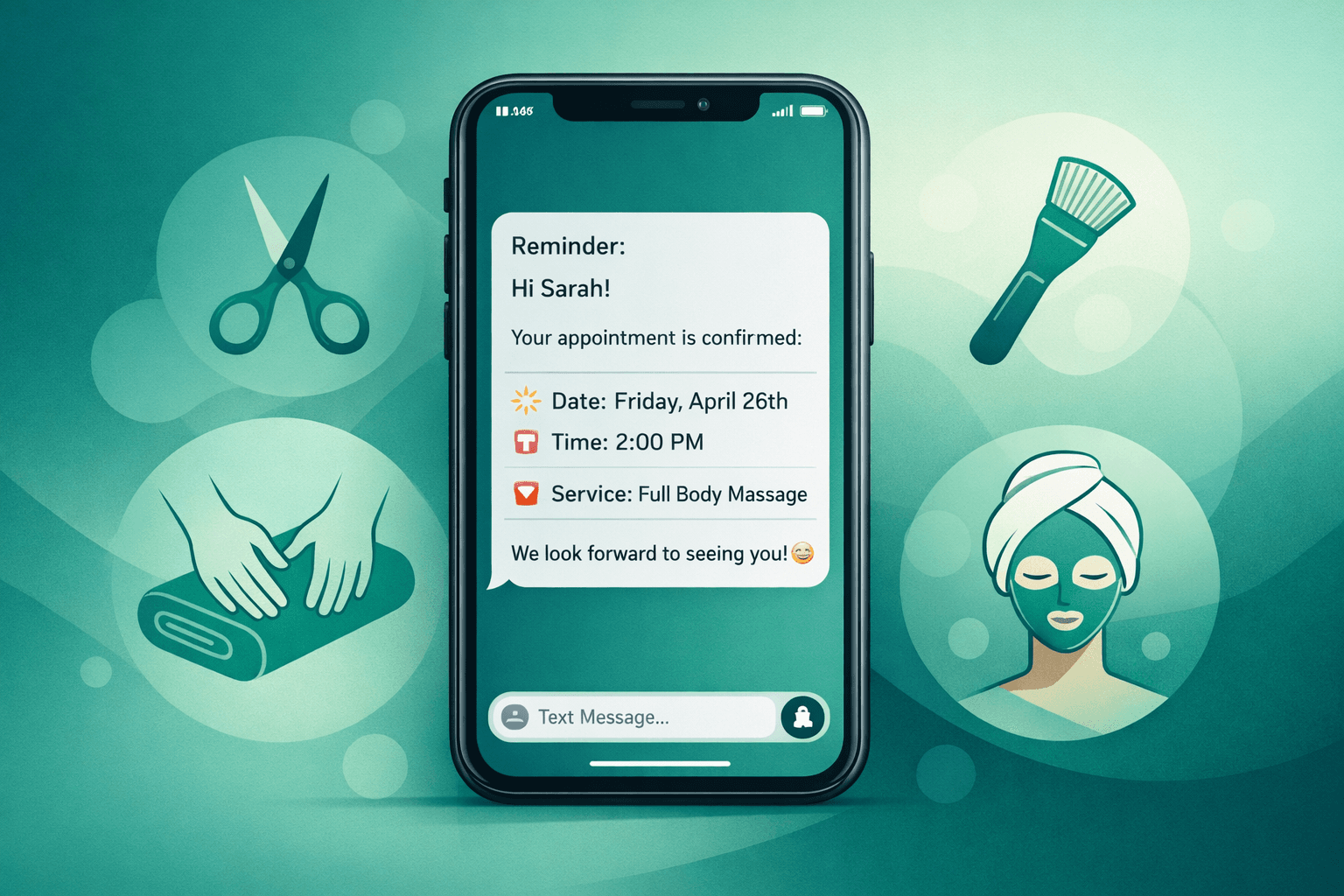
Most businesses rely on text messages or automated phone calls for appointment reminders. The problem? Text messages get ignored (average open rate: 62%), and robocalls get hung up on immediately.
Voice AI is different. When customers receive a call that sounds human, asks conversational questions, and can handle their responses naturally, they engage. They confirm, reschedule, or ask questions — all without involving your staff.
The Psychology Behind Voice Engagement
Here's what's actually happening: customers respond better to voice because it feels personal. A text saying "Appointment tomorrow at 2pm" requires the customer to remember context. A voice call that says "Hi Sarah, this is confirming your highlights appointment tomorrow at 2pm with Jessica" triggers immediate recognition.
When customers can respond naturally — "Actually, can we move that to 3pm?" — and get an immediate answer, they feel heard. That engagement translates to higher show-up rates.
The 2026 Voice AI Advantage: Real Numbers
Early adopters are sharing impressive results:
The most dramatic improvements happen with higher-value appointments. When someone books a $300 facial or $150 massage, a personal voice reminder carries more weight than a text.
Beyond Reminders: Active Scheduling Management
The best voice AI systems don't just remind — they actively manage your schedule. They can:
Implementation: What Actually Works
Not all voice AI is created equal. Businesses seeing the biggest improvements share common implementation strategies.
Timing Matters More Than You Think
The sweet spot for voice reminders is 24-48 hours before the appointment. Too early, and customers forget. Too late, and they can't reschedule if needed.
Successful businesses also use multiple touchpoints: a confirmation call when booking, a reminder 48 hours out, and a final confirmation the morning of.
Integration With Your Existing CRM
The voice AI needs to sync with whatever system you're already using — Vagaro, Boulevard, Mindbody, or Fresha. Real-time updates mean when a customer reschedules during the voice call, your calendar updates immediately.
Without proper integration, you're managing two systems and creating more work, not less.
Staff Training and Customer Communication
Your team needs to know how the system works, especially for handling edge cases. When a customer calls the salon directly after receiving a voice reminder, your staff should know how to check the system status.
Many businesses also add a line to their booking confirmations: "You'll receive a friendly voice call to confirm your appointment." Setting expectations reduces confusion.
The ROI Calculation That Matters
Let's do the math on a typical salon:
With voice AI reducing no-shows to 13%:
Even after accounting for the voice AI service cost, most businesses see positive ROI within 60 days.
The Compounding Effect
Lower no-shows create a ripple effect:
What's Coming Next in Voice AI
The technology is evolving rapidly. By late 2026, expect to see:
Companies like Shamrok are already testing some of these features, with predictive scheduling showing promising early results.
Getting Started: The Practical Steps
If you're considering voice AI for your business, start with these questions:
Most voice AI providers offer pilot programs where you can test the system with a portion of your appointments before full implementation.
The Bottom Line
Voice AI isn't just a cool technology — it's a practical solution to one of service businesses' biggest problems. The 40% reduction in no-shows isn't theoretical; it's happening right now in salons, spas, and clinics across the country.
The businesses investing in voice AI today are building competitive advantages that compound over time. Higher show-up rates mean more predictable revenue, happier staff, and better customer relationships.
The question isn't whether voice AI will become standard in service businesses — it's whether you'll be an early adopter or playing catch-up later.
FAQ
How much does voice AI for appointment reminders typically cost?
Most voice AI platforms charge between $150-$400 per month for small to medium businesses, depending on call volume. The ROI usually justifies the cost within 60-90 days through reduced no-shows.
Will customers be annoyed by AI calling them?
Early data shows the opposite — when voice AI sounds natural and provides value, customer satisfaction actually increases. The key is quality implementation and setting proper expectations.
Can voice AI handle complex scheduling requests?
Modern voice AI can handle most common requests like rescheduling, cancellations, and basic questions. Complex situations typically get escalated to staff, but this represents less than 5% of interactions.
How quickly can voice AI be implemented in an existing business?
Most businesses are fully operational within 1-2 weeks, including CRM integration and staff training. The biggest factor is how quickly your current CRM can provide API access.