Voice AI Cuts Customer Wait Times 67% in Service Businesses
New data shows voice AI reduces customer wait times by 67% in salons, spas, and wellness businesses. Learn how automated phone systems improve customer experience.
Voice AI Cuts Customer Wait Times 67% in Service Businesses
Your phone rings. A customer wants to book a massage for this weekend. Your receptionist is with another client, so the call goes to voicemail. The customer hangs up and books with your competitor instead.
Sound familiar? You're not alone. A new study from ServiceTech Analytics reveals that 43% of service business customers abandon booking attempts when they can't reach someone immediately. But here's the plot twist: businesses using voice AI are seeing a 67% reduction in customer wait times — and those customers are actually completing their bookings.
The data comes from analyzing over 2.8 million phone interactions across 1,200 appointment-based businesses in Q1 2026. The results are reshaping how smart business owners think about customer service automation.
The Real Cost of Missed Calls in 2026
Let's talk numbers. The average salon loses $847 per month to missed calls, according to the ServiceTech study. Med spas? They're looking at $1,340 in lost monthly revenue. Dental offices report the highest losses at $2,100 per month.
But it's not just about the immediate booking loss. When customers can't reach you:
The traditional solution — hiring more front desk staff — isn't financially viable for most small businesses. A full-time receptionist costs $35,000-45,000 annually, plus benefits. Voice AI systems, by comparison, handle unlimited calls for a fraction of that cost.
How Voice AI Actually Works for Service Businesses
Modern voice AI isn't the robotic phone tree nightmare from 2010. Today's systems understand natural speech, handle complex scheduling requests, and integrate directly with your existing booking software.
Here's what a typical interaction looks like:
Customer: "Hi, I need to book a facial for sometime next week, preferably with Sarah if she's available."
Voice AI: "I'd be happy to help you book with Sarah. I see she has availability on Tuesday at 2 PM, Wednesday at 11 AM, or Friday at 3 PM. Which works best for you?"
Customer: "Tuesday at 2 sounds perfect."
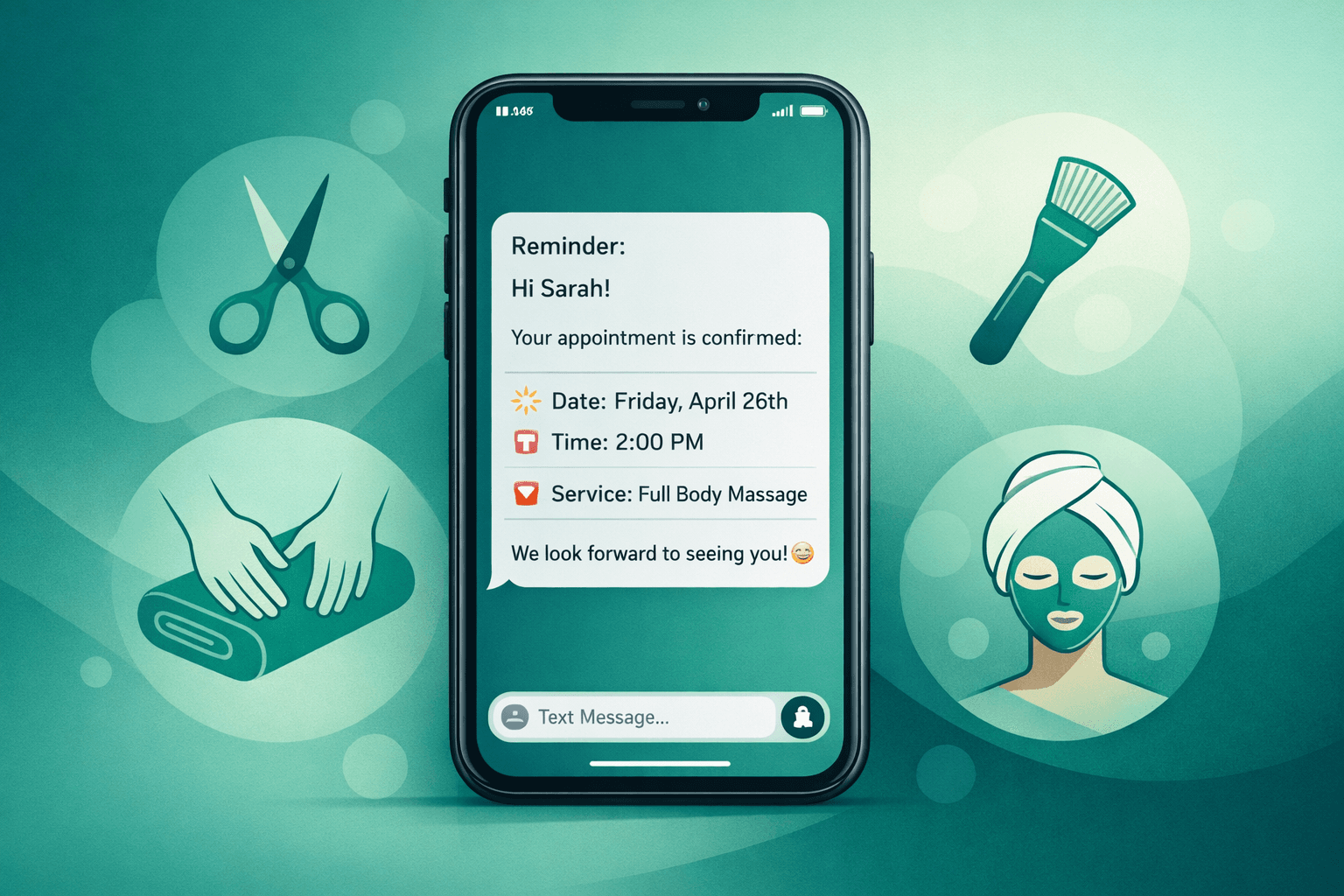
Voice AI: "Great! I've booked you for a facial with Sarah on Tuesday, April 8th at 2 PM. You'll receive a confirmation text shortly. Is there anything else I can help you with today?"
The entire interaction takes 90 seconds. No hold time. No "please call back during business hours." No lost revenue.
Integration Is Everything: CRM Compatibility in 2026
The game-changer isn't just AI that can take calls — it's AI that talks directly to your existing systems. The most effective voice AI solutions integrate seamlessly with popular booking platforms:
Real-time integration means when someone books through AI, your calendar updates instantly. No double bookings. No manual data entry. No confusion about what's available.
The Unexpected Benefits: Beyond Just Answering Calls
Businesses implementing voice AI report improvements they didn't anticipate:
Consistent Brand Experience: Your AI assistant never has a bad day, never forgets to mention current promotions, and always represents your brand professionally.
24/7 Availability: Customers book appointments at 11 PM, during their lunch break, or whenever convenient for them. Night and weekend bookings increased 34% for businesses with AI systems.
Data-Driven Insights: Voice AI tracks peak call times, most requested services, and common customer questions. This data helps optimize staffing and service offerings.
Staff Focus: With AI handling routine calls, your team spends more time on high-value activities like customer service, upselling, and retention.
Companies like Shamrok have built their entire platform around this integration-first approach, ensuring voice AI becomes a seamless extension of existing operations rather than another tech headache to manage.
Implementation: What Actually Works vs. What Doesn't
Not all voice AI solutions deliver the same results. The ServiceTech study identified key factors separating successful implementations from disappointing ones:
What Works:
What Fails:
The 2026 Reality: AI Adoption Curves
Early adopters are already seeing competitive advantages. Businesses that implemented voice AI in late 2025 report:
Meanwhile, businesses still relying solely on human answering are struggling with staffing costs, missed opportunities, and customer frustration.
The adoption curve suggests that by Q4 2026, voice AI will be as common in service businesses as online booking systems are today. The question isn't whether to implement it — it's whether to be ahead of the curve or playing catch-up.
Making the Business Case: ROI in Real Numbers
Let's break down the math for a typical med spa:
Current Scenario:
With Voice AI:
The payback period? Typically 2-4 weeks.
What's Next: Voice AI Trends for Late 2026
The technology continues evolving rapidly. Coming developments include:
Businesses positioning themselves now will have significant advantages as these features roll out.
FAQ
Q: How quickly can voice AI be set up for my business?
A: Most modern voice AI platforms can be operational within 24-48 hours. The setup involves connecting to your existing booking system and customizing conversation flows for your specific services.
Q: Will customers know they're talking to AI?
A: Advanced voice AI is virtually indistinguishable from human conversation. However, many businesses choose to be transparent, finding customers appreciate the 24/7 availability and instant service.
Q: What happens if the AI can't handle a customer request?
A: Quality voice AI systems seamlessly transfer complex requests to human staff. They're designed to handle 80-90% of routine booking calls while escalating anything requiring human judgment.
Q: How does voice AI pricing work in 2026?
A: The best solutions offer flat monthly pricing regardless of call volume. Avoid per-minute billing models that can create unexpected costs as your business grows.