Voice AI Cuts Phone Tag by 78% in Service Businesses
New data shows voice AI is eliminating phone tag for spas, salons, and wellness businesses. Learn how automated booking calls are changing customer service in 2026.
Voice AI Cuts Phone Tag by 78% in Service Businesses
Phone tag is dead. At least, it should be.
New research from the Service Industry Technology Association shows that businesses using voice AI for appointment booking have reduced phone tag incidents by 78% compared to traditional phone systems. For service businesses like spas, salons, dental offices, and wellness clinics, this isn't just a nice-to-have improvement—it's becoming a competitive necessity.
The numbers tell a clear story: customers expect immediate responses, and businesses that can't deliver are losing bookings to competitors who can. But here's what's really interesting about the 2026 voice AI landscape—it's no longer about replacing human receptionists. It's about creating a hybrid system that captures every opportunity while keeping your team focused on what they do best.
The Real Cost of Missed Calls in Service Businesses
Let's start with what you already know: every missed call is potential revenue walking out the door. But the actual numbers might surprise you.
According to recent industry data, the average med spa loses $47,000 annually from missed calls during busy periods. Hair salons lose an average of $23,000. Dental practices? They're looking at $62,000 in lost revenue from calls that go to voicemail during peak booking times.
The problem isn't just missed calls—it's the phone tag cycle that follows. A customer calls to book, gets voicemail, leaves a message. Your receptionist calls back three hours later, gets their voicemail. They call back the next day, catch you during a treatment, and the cycle continues. By the time you connect, they've either booked elsewhere or lost interest entirely.
Voice AI breaks this cycle by handling the initial booking conversation in real-time. The customer calls, gets immediate assistance, and either books an appointment or gets their questions answered without waiting. No phone tag. No missed opportunities.
How Voice AI Actually Works for Appointment Booking
If you're picturing a robotic voice asking "Did you say Tuesday?" twenty times, you're thinking of old technology. Modern voice AI for service businesses sounds remarkably human and can handle complex booking scenarios.
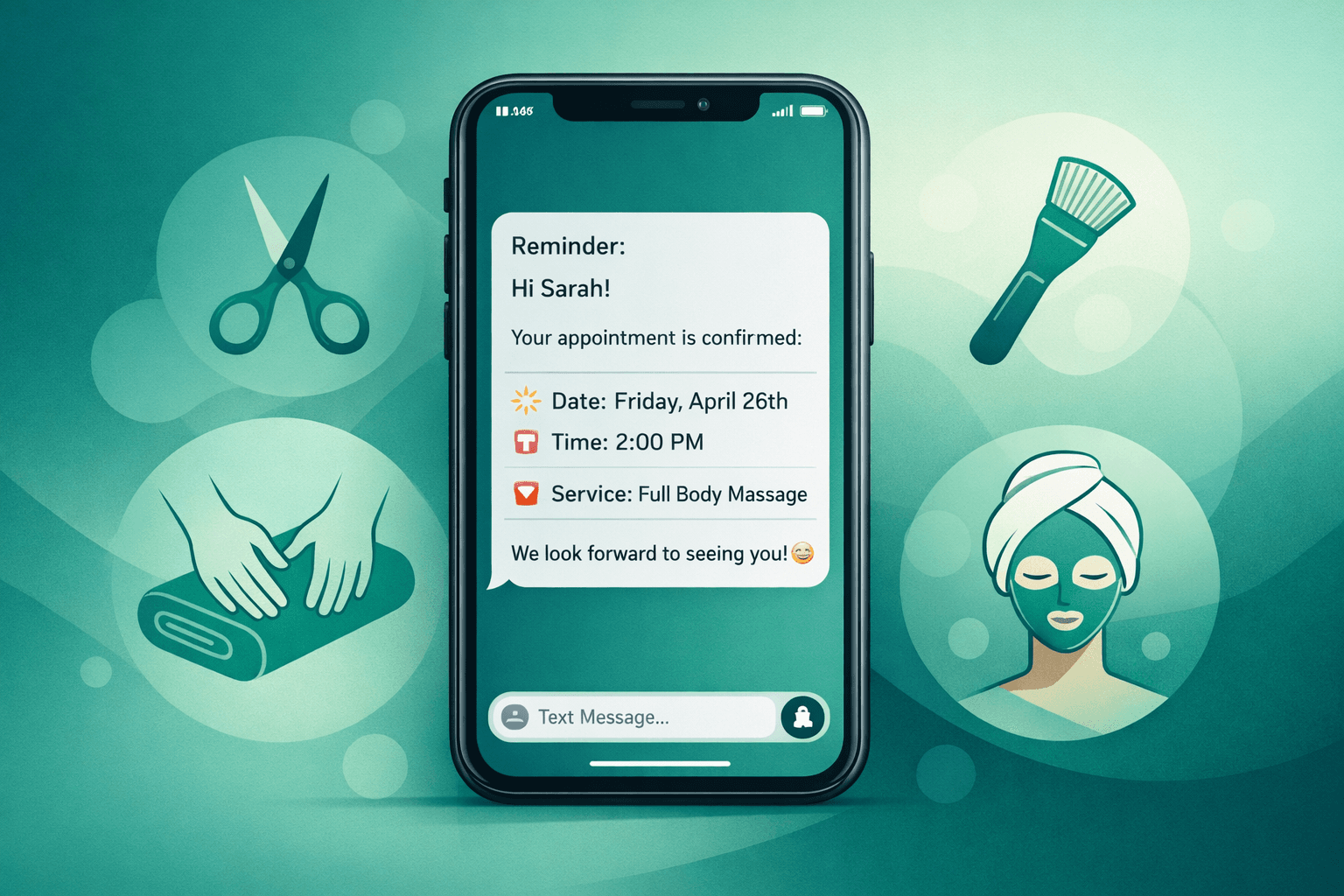
Here's what a typical interaction looks like: A customer calls asking for a facial appointment "sometime next week, preferably with Sarah." The AI checks your calendar in real-time, sees that Sarah has availability on Tuesday at 2 PM and Thursday at 11 AM, and presents both options. The customer chooses Tuesday, the AI books the appointment directly into your system, sends confirmation texts to both the customer and Sarah, and asks if they'd like to add any specific treatments to the facial.
The entire conversation takes 2-3 minutes and happens while your human staff is focused on the clients already in your business. Your receptionist gets a notification about the new booking but doesn't need to interrupt their current task to handle it.
Integration Reality Check: What Actually Works
The biggest hurdle for most businesses isn't the AI technology itself—it's integration with existing systems. If you're using booking software like Vagaro, Boulevard, Mindbody, or Fresha, you need voice AI that talks directly to these platforms. Otherwise, you're just creating more work for your team.
Successful implementations connect voice AI directly to your CRM and booking system. When someone calls to reschedule, the AI pulls up their existing appointment, checks availability, makes the change, and updates all relevant staff automatically. When someone calls asking about pricing for a specific service, the AI references your current pricing structure and can even check for applicable promotions.
The key is choosing voice AI built specifically for appointment-based businesses rather than general-purpose chatbots adapted for phone use. The difference shows up in features like understanding service-specific terminology, handling complex scheduling requests, and managing multi-provider availability.
Beyond Booking: Voice AI for Customer Service
While appointment booking gets most of the attention, voice AI is proving equally valuable for routine customer service tasks. Think about how many of your daily calls fall into these categories:
These calls don't require human judgment, but they do require immediate attention. Voice AI handles them instantly, freeing your team to focus on more complex customer needs and in-person service delivery.
One unexpected benefit businesses report is improved customer satisfaction scores. When customers can get quick answers to simple questions without waiting on hold, their overall experience improves—even if they never interact with human staff during that call.
The Numbers: ROI of Voice AI in Service Businesses
Let's talk about what this actually costs versus what it returns. Most voice AI platforms for service businesses charge between $200-500 per month, depending on call volume and features. Compare that to the cost of hiring additional reception staff or the revenue lost from missed opportunities.
A typical 3-chair salon implementing voice AI sees:
For larger operations, the numbers scale accordingly. A multi-location wellness business reported saving $180,000 annually in staffing costs while increasing bookings by 31% across all locations.
The payback period is typically 2-4 months, making voice AI one of the faster-returning technology investments service businesses can make.
Implementation: What to Expect in the First 30 Days
Rolling out voice AI isn't like installing new scheduling software that requires weeks of staff training. Most businesses are fully operational within 48 hours of setup.
Week 1: System setup and integration with your existing booking platform. Your AI gets trained on your specific services, pricing, and policies. Staff receives basic overview training—usually just 30 minutes covering what the AI handles versus when to transfer calls to humans.
Week 2-3: Fine-tuning based on actual customer interactions. The AI learns your customers' common requests and your preferred ways of handling different scenarios. Call volume typically increases as customers discover they can reach you anytime without waiting.
Week 4: Full optimization. By this point, the AI handles 70-80% of routine calls independently, with complex situations seamlessly transferred to human staff who now have more time to provide personalized service.
Businesses often report that the biggest adjustment isn't technical—it's psychological. Staff members initially worry about being replaced, but quickly realize the AI is handling tasks they never enjoyed anyway, giving them more time for the customer interactions they actually value.
Looking Ahead: Voice AI Trends for 2026
The voice AI landscape is evolving rapidly, with several trends emerging that will impact service businesses throughout 2026:
Multi-language support is becoming standard, crucial for businesses in diverse markets. Voice AI can now switch languages mid-conversation based on customer preference.
Predictive scheduling uses customer history and preferences to suggest optimal appointment times and services. Instead of just booking what customers request, AI can recommend better alternatives based on their past visits and current availability.
Integration depth continues improving. The newest platforms don't just book appointments—they can process payments, update customer profiles, schedule follow-up communications, and even coordinate with inventory management systems.
Voice quality has reached the point where customers often don't realize they're speaking with AI until the interaction is complete. This removes the barrier some customers felt about interacting with "robots."
For service business owners, the question isn't whether to adopt voice AI, but which solution fits your specific needs and how quickly you can implement it before competitors gain the advantage.
Making the Decision: Is Voice AI Right for Your Business?
Voice AI makes sense for most appointment-based service businesses, but the impact varies based on a few key factors:
Call volume: If you receive more than 50 calls per week, you'll see immediate benefits. Higher volume businesses see proportionally greater returns.
Missed call rate: Businesses that frequently miss calls during busy periods see the biggest improvements in customer satisfaction and revenue capture.
Staff utilization: If your reception staff spends more than 30% of their time on routine appointment scheduling and basic questions, voice AI will free significant capacity for higher-value activities.
Growth goals: Businesses planning to expand locations or services benefit from voice AI's scalability. The same system that handles 100 calls per week can handle 1,000 with minimal additional cost.
The technology has matured to the point where implementation risk is minimal and ROI is measurable within weeks rather than months. For service businesses competing on customer experience and operational efficiency, voice AI has shifted from "nice-to-have" to "competitive necessity."
FAQ
Q: How long does it take for customers to get comfortable talking to voice AI?
A: Most customers adapt within one call. Modern voice AI sounds natural and responds quickly enough that many customers don't realize they're not speaking with a human until the conversation is over. The key is immediate responsiveness—no hold times or "please wait while I transfer you" delays.
Q: What happens if the AI can't handle a customer's request?
A: Quality voice AI systems seamlessly transfer complex requests to human staff with full context about what the customer needs. The transfer includes conversation history so staff doesn't have to ask customers to repeat information. This happens in about 20-30% of calls initially, dropping to 15-20% once the system learns your business patterns.
Q: Can voice AI handle cancellations and rescheduling, or just new bookings?
A: Advanced voice AI handles the full spectrum of appointment management: new bookings, cancellations, rescheduling, and modifications. It can check your cancellation policy, apply appropriate fees, and even suggest alternative times for rescheduled appointments based on real-time availability.
Q: How does voice AI pricing work—per call, per month, or per feature?
A: Pricing models vary significantly between providers. Some charge per call or per minute, which can create unpredictable costs as your business grows. Others use flat monthly fees based on expected call volume. For budget planning, flat-rate models are generally more predictable and business-friendly, especially for growing operations.