Why Multi-Modal AI Will Transform Service Bookings in 2026
Multi-modal AI combines voice, text, and images to revolutionize how customers book appointments. Learn practical applications for small service businesses.
Why Multi-Modal AI Will Transform Service Bookings in 2026
If you've been following AI developments, you've likely heard the term "multi-modal" thrown around in tech circles. But what does this actually mean for your salon, spa, or wellness clinic? More than you might think.
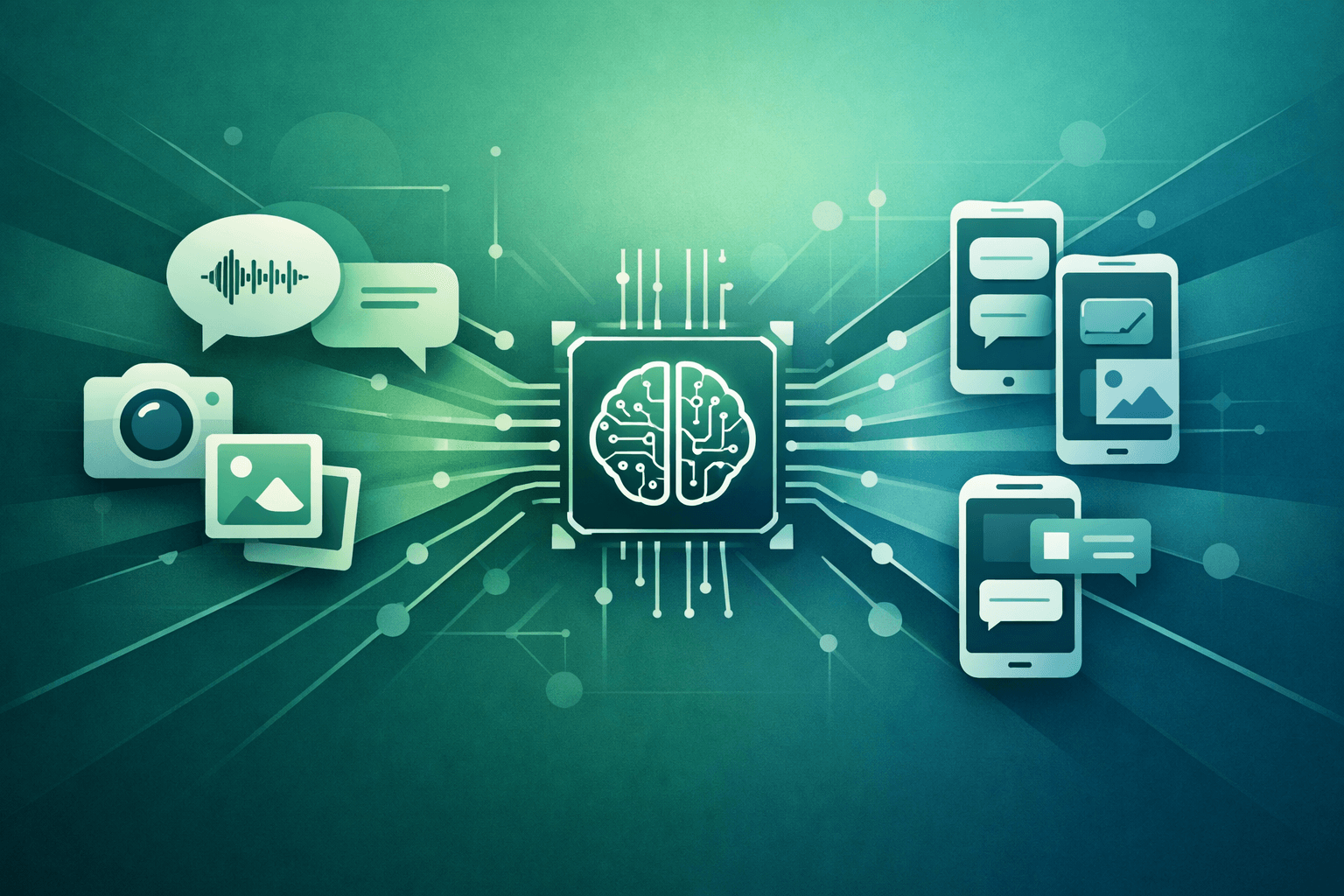
Multi-modal AI refers to systems that can process and respond to multiple types of input simultaneously — voice, text, images, and even video. While previous AI tools focused on one communication channel, 2026 is seeing the emergence of platforms that seamlessly blend these interactions. For appointment-based businesses, this shift represents the biggest evolution in customer booking behavior since online scheduling replaced phone calls.
What Multi-Modal AI Looks Like in Practice
Imagine a customer wanting to book a hair appointment. Instead of calling or filling out a form, they could:
A multi-modal AI system processes all this information simultaneously, understanding context across formats to suggest the right stylist, estimate appointment duration, and book accordingly. This isn't science fiction — early implementations are already rolling out across major booking platforms.
Real-World Applications Today
Several service businesses are testing multi-modal approaches:
Beauty Industry: Clients upload photos of desired nail art while verbally describing their timeline and budget constraints.
Medical Spas: Patients submit skin photos with voice notes about their concerns, helping practitioners prepare treatment recommendations before the consultation.
Fitness Studios: Members describe their goals through voice messages while sharing progress photos, enabling personalized class recommendations.
The Technology Behind the Shift
Multi-modal AI combines several technological advances that matured in 2025:
Vision-Language Models
These systems can "see" images and understand their context when combined with text or voice input. For service businesses, this means AI can interpret before/after photos, reference images, or visual descriptions of problems.
Advanced Voice Processing
Modern speech recognition doesn't just transcribe words — it understands tone, emotion, and context. When a customer sounds frustrated while describing a previous bad experience, the AI factors that emotional context into its response.
Contextual Memory
Unlike earlier chatbots that treated each interaction as isolated, multi-modal systems remember previous conversations across channels. A customer might start a booking inquiry via text, continue over the phone, and finish through your app — with the AI maintaining context throughout.
Impact on Customer Expectations
The rise of multi-modal AI is rapidly shifting what customers expect from booking experiences:
Convenience: Customers want to communicate however feels natural in the moment, without being forced into a specific channel.
Speed: Multi-modal systems can process complex requests faster than traditional back-and-forth conversations.
Personalization: By analyzing multiple data types, AI can offer more tailored recommendations and scheduling options.
According to recent industry data, 73% of consumers under 35 prefer businesses that offer flexible communication options during booking. This percentage jumps to 89% when the interaction involves visual elements like style preferences or problem areas.
Practical Steps for Small Businesses
While full multi-modal integration might seem overwhelming, you can prepare your business for this shift:
Start With Voice + Text Integration
Many existing booking platforms now support voice notes alongside traditional text input. Enable these features and train staff to respond appropriately to voice messages.
Optimize for Visual Communication
Even without AI, encourage customers to share reference photos through your booking system. Create workflows for staff to review and respond to visual requests efficiently.
Audit Your Current Tech Stack
Evaluate whether your CRM and booking platforms can handle multiple communication channels. Systems like Vagaro and Boulevard are already adding multi-modal features — ensure you're using them effectively.
Train Your Team
Multi-modal interactions require different customer service skills. Staff need to interpret context across communication types and respond appropriately to varied input formats.
Challenges to Consider
Multi-modal AI isn't without complications:
Privacy Concerns: Handling images and voice data requires robust privacy protections. Ensure your systems comply with local regulations regarding biometric data.
Technical Complexity: Integration can be challenging, especially for smaller businesses with limited IT resources.
Cost Considerations: Advanced AI features often come with premium pricing. Calculate ROI carefully before committing to expensive upgrades.
Staff Training: Your team needs to understand how to work alongside multi-modal systems effectively.
Looking Ahead: What's Coming Next
Industry experts predict several developments for late 2026:
Augmented Reality Integration: Customers might virtually "try on" services before booking, using AR combined with voice descriptions.
Predictive Scheduling: AI will anticipate customer needs based on historical patterns, seasonal trends, and visual cues.
Cross-Platform Continuity: Conversations started on social media will seamlessly continue through booking systems without losing context.
Companies like Shamrok are already working on voice AI platforms that integrate naturally with existing CRM systems, making multi-modal capabilities accessible to smaller service businesses without requiring complete technology overhauls.
The Bottom Line
Multi-modal AI represents an evolution, not a revolution. The businesses that thrive will be those that thoughtfully integrate these capabilities while maintaining the personal touch that defines great service.
Start by enabling the multi-modal features already available in your current systems. Train your team to handle varied communication styles. Most importantly, remember that technology should enhance human connections, not replace them.
The goal isn't to automate everything — it's to remove friction from the booking process so you can focus on delivering exceptional service once customers arrive.
FAQ
Q: Do I need to completely replace my current booking system to support multi-modal AI?
A: Not necessarily. Many existing platforms are adding multi-modal features through updates. Check with your current provider about their roadmap before considering a complete system change.
Q: How do I ensure customer privacy when handling voice and image data?
A: Work with booking platforms that offer end-to-end encryption and clear data retention policies. Always inform customers how their data will be used and stored.
Q: What's the ROI timeline for implementing multi-modal AI features?
A: Most businesses see improved booking conversion rates within 2-3 months of implementation, with customer satisfaction scores improving more gradually over 6 months as staff become proficient with the technology.
Q: Can multi-modal AI handle multiple languages?
A: Many current systems support multiple languages for text and voice input, though image recognition capabilities may vary by language and cultural context.