Why Your Customers Expect 24/7 Service (And How AI Delivers)
Modern customers expect instant responses. Learn how small businesses use AI to meet 24/7 service demands without burning out staff or breaking budgets.
Why Your Customers Expect 24/7 Service (And How AI Delivers)
Remember when businesses could get away with "We'll call you back tomorrow"? Those days are gone. Today's customers expect immediate responses, whether they're booking a haircut at 11 PM or asking about your spa's COVID protocols on Sunday morning.
This shift isn't just about impatience — it's about how fundamentally customer behavior has changed. A recent study by HubSpot found that 90% of customers rate an "immediate" response as important when they have a customer service question. And "immediate"? That means within 10 minutes or less.
For small business owners, this creates a real problem: How do you provide round-the-clock service without working around the clock yourself?
The Reality of Modern Customer Expectations
Let's start with some hard numbers. According to Microsoft's State of Global Customer Service report:
For appointment-based businesses like salons, spas, dental offices, and fitness studios, these expectations are even more intense. When someone wants to book a massage or reschedule a dental cleaning, they want it handled now — not during your business hours.
What Drives These Expectations?
Three major factors have reshaped customer service expectations:
Digital-First Interactions: Customers interact with brands primarily through digital channels. They're used to instant responses from chatbots, apps, and automated systems.
Competitive Markets: In saturated industries like beauty and wellness, customer service becomes a key differentiator. If one spa responds instantly and another takes hours, the choice is obvious.
Post-COVID Flexibility: The pandemic taught everyone to expect more flexible, accessible service. Customers now see 24/7 availability as a baseline, not a luxury.
The Small Business Dilemma: Service vs. Sanity
Here's where most small business owners get stuck. You know customers want instant responses, but you also know:
This creates what we call the "service paradox" — the more successful your business becomes, the harder it gets to maintain the personal touch that made you successful in the first place.
The Hidden Costs of Delayed Response
When you don't respond quickly, you're not just disappointing customers — you're losing money:
How AI Solves the 24/7 Service Challenge
This is where artificial intelligence becomes genuinely useful — not as a replacement for human connection, but as a way to extend your capacity without extending your hours.
AI Phone Answering: Beyond Basic Voicemail
Modern AI can handle phone calls with surprising sophistication. Unlike the robotic phone trees of the past, today's voice AI can:
Companies like Shamrok have built voice AI specifically for appointment-based businesses, integrating directly with platforms like Vagaro, Boulevard, and Mindbody. This means the AI isn't just taking messages — it's actually managing your calendar.
Smart Text and Chat Automation
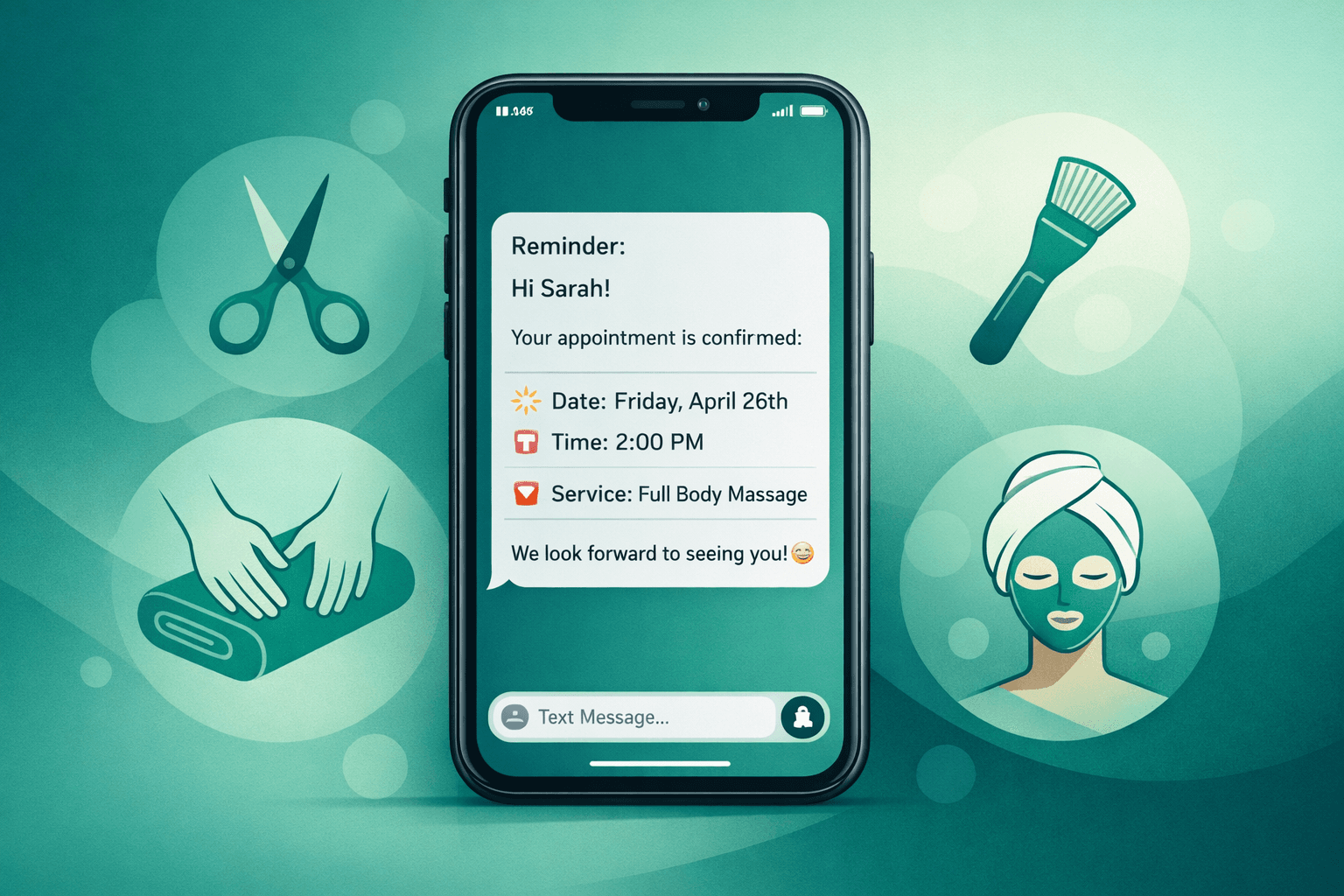
While phone calls get attention, text messages are often how customers prefer to communicate. AI can handle:
Email Automation That Feels Personal
AI-powered email systems can handle routine communications while maintaining your brand voice:
Implementation Strategy: Start Simple, Scale Smart
The key to successful AI implementation isn't trying to automate everything at once. Here's a practical approach:
Phase 1: After-Hours Coverage (Month 1-2)
Start by using AI to handle inquiries when you're closed:
Phase 2: Peak Hour Support (Month 3-4)
Once after-hours AI is working smoothly, expand to busy periods:
Phase 3: Advanced Automation (Month 5+)
With basics covered, add sophisticated features:
Measuring Success: What Actually Matters
Don't just implement AI and hope for the best. Track these key metrics:
Response Time: Average time to first response (aim for under 5 minutes)
Booking Conversion: Percentage of inquiries that become appointments
Customer Satisfaction: Survey scores specifically about communication
Staff Efficiency: Time saved on routine tasks
Revenue Impact: Monthly booking volume and average transaction value
Common Pitfalls to Avoid
Based on what we've seen across hundreds of service businesses, here are the mistakes that derail AI implementations:
Over-Automation Too Fast
Don't try to automate complex customer service scenarios right away. Start with simple, routine interactions and gradually expand.
Forgetting the Human Touch
AI should enhance human service, not replace it entirely. Make sure customers can always reach a real person when needed.
Ignoring Integration
AI that doesn't connect to your booking system, CRM, or payment processor creates more work, not less. Prioritize solutions that integrate with your existing tools.
Neglecting Quality Control
Regularly review AI interactions to ensure they're meeting your standards. Poor AI service is worse than no AI service.
Looking Forward: The Service Advantage
24/7 service availability is quickly becoming table stakes in customer service. The businesses that implement it well today will have a significant advantage over competitors who wait.
More importantly, AI-powered customer service isn't just about meeting expectations — it's about exceeding them. When you can provide instant, accurate, helpful responses at any hour, you're not just keeping up with customer demands. You're setting a new standard that competitors will struggle to match.
The question isn't whether your customers expect 24/7 service — they already do. The question is whether you'll meet that expectation before your competitors do.
FAQ
Q: How much does AI customer service typically cost for small businesses?
A: Most AI customer service solutions for small businesses range from $100-500 per month, depending on features and call volume. Many providers offer flat-rate pricing rather than per-minute billing, making costs predictable.
Q: Will customers be able to tell they're talking to AI?
A: Modern voice AI is sophisticated enough that many customers don't immediately realize they're speaking with AI, especially for routine interactions. However, transparency is important — many businesses choose to mention they're using AI assistance.
Q: What happens when AI can't handle a customer's request?
A: Good AI systems are programmed to recognize their limitations and smoothly transfer complex requests to human staff. They can also take detailed messages and schedule callback times when staff are available.
Q: How long does it take to set up AI customer service?
A: Basic AI phone answering can typically be set up within 1-2 weeks. More complex integrations with booking systems and CRM platforms may take 2-4 weeks depending on your current tech stack.