AI Receptionist Small Business: Replace Your Front Desk
AI receptionists handle calls, book appointments, and reduce missed revenue for small businesses. Learn costs, benefits, and implementation tips.
AI Receptionist Small Business: Replace Your Front Desk
TL;DR: AI receptionists are becoming the go-to solution for small businesses drowning in missed calls and front-desk overhead. These systems handle appointment booking, customer inquiries, and after-hours calls without the $40,000+ annual cost of human staff. Here's what you need to know about implementing one in 2026.
Your phone rings during your busiest appointment of the day. A potential client wants to book a service for next week. By the time you finish with your current customer and check voicemail, that caller has already booked with your competitor down the street.
This scenario plays out thousands of times daily across small businesses. The math is brutal: a single missed call can represent $100-500 in lost revenue, depending on your service. Multiply that by the 27% of business calls that go unanswered during peak hours, and you're looking at serious money walking out the door.
AI receptionists are changing this dynamic. These aren't the clunky phone trees from 2015. Modern voice AI handles natural conversations, books appointments directly into your calendar, and captures leads 24/7 without coffee breaks or sick days.
The Real Cost of Missed Calls
Before diving into AI solutions, let's quantify what you're losing to unanswered phones. The average small business misses 30-40% of calls during peak operating hours. For appointment-based businesses, this translates to immediate revenue loss.
Consider a mid-sized salon that charges $150 per service and receives 50 calls per week. If 35% go unanswered and 60% of those would have booked, that's 10.5 lost appointments weekly. At $150 each, that's $82,000 in annual lost revenue from missed calls alone.
Traditional solutions involve hiring front-desk staff. A full-time receptionist costs $35,000-45,000 annually in salary, plus benefits, training, and coverage for sick days and vacations. Many small businesses need coverage beyond standard hours, requiring multiple staff members or overtime pay.
The hiring challenge compounds the problem. Good receptionists who understand appointment booking, can handle customer service issues, and represent your brand professionally are increasingly hard to find and retain.
How AI Receptionists Actually Work
Modern AI receptionists use natural language processing to conduct real conversations. Unlike old-school phone systems that require specific keywords, these systems understand context and intent.
When a customer calls, the AI answers with your custom greeting and business name. It can handle complex requests like "I need a haircut and color next Tuesday afternoon, but not before 2 PM because I have a meeting." The system checks your actual calendar availability and books the appointment instantly.
The integration happens through APIs that connect to your existing booking system. Whether you use Vagaro, Boulevard, Mindbody, Mangomint, or another platform, the AI accesses real-time availability and updates your schedule immediately.
For inquiries the AI can't handle, it captures detailed information and either transfers to staff or schedules a callback. No more "please hold" loops or lost messages.
Key Features That Matter for Small Business
Not all AI receptionist systems are built the same. Here are the capabilities that make or break implementation for small businesses:
Calendar Integration: The system must sync with your existing booking platform in real-time. Outdated availability information kills the customer experience.
Natural Conversation Flow: Customers should feel like they're talking to a knowledgeable human, not a robot. The AI needs to handle interruptions, clarification questions, and complex scheduling requests.
After-Hours Coverage: 40% of appointment bookings happen outside business hours. Your AI should capture these calls and book appointments while you sleep.
Payment Processing: For businesses requiring deposits or full payment at booking, the AI should handle secure payment collection through your existing merchant services.
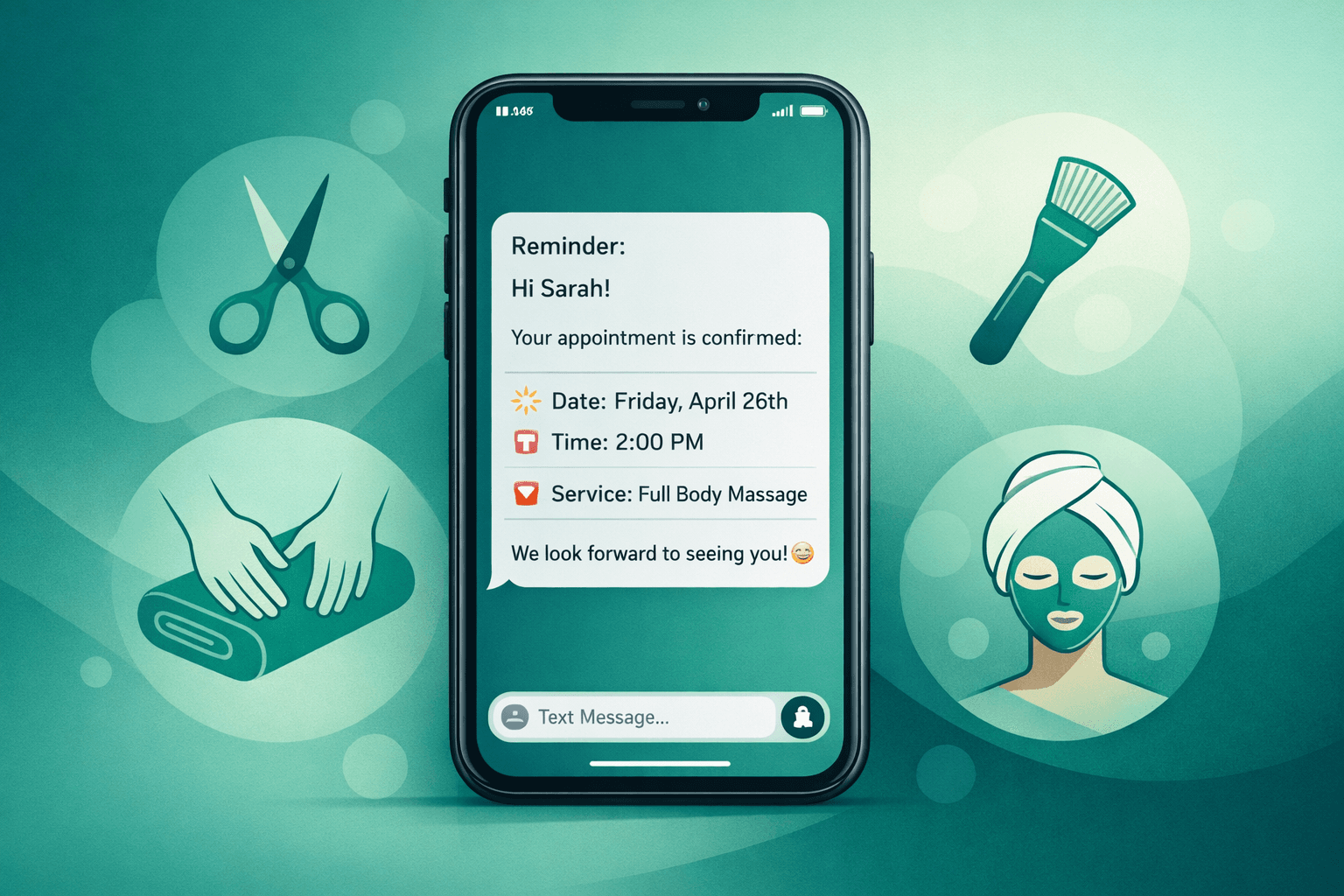
No-Show Management: Advanced systems can make confirmation calls, send reminders, and even attempt to reschedule last-minute cancellations.
Transfer Capabilities: When issues require human intervention, the AI should seamlessly transfer to staff with full context of the conversation.
Implementation Without the Headaches
The biggest implementation mistake is trying to replace all front-desk functions immediately. Start with appointment booking and basic inquiries, then expand capabilities as you see what works.
Begin by identifying your peak missed-call times. Most appointment-based businesses see spikes during lunch hours, evenings, and weekends. Configure your AI to handle overflow during these periods while staff focuses on in-person customers.
Script development matters more than most business owners realize. Your AI's responses should match your brand voice and include the specific information customers need. Generic scripts feel robotic and miss opportunities to differentiate your business.
Training your team on the new system prevents conflicts between AI and human staff. Define clear handoff procedures for situations requiring human intervention, and ensure staff can monitor AI interactions when needed.
Test thoroughly before full deployment. Have friends and family call to book appointments, ask questions, and try to break the system. Better to find issues during testing than in front of real customers.
ROI Calculations That Matter
The math on AI receptionists usually works in favor of small businesses, but the timeline varies. Initial costs typically range from $200-800 monthly depending on call volume and features needed.
Compare this to human receptionist costs. A part-time employee working 25 hours weekly at $15/hour costs $19,500 annually before taxes and benefits. Full-time staff with benefits can reach $50,000+ annually.
Revenue recovery often pays for the system within months. If your AI captures just 2-3 additional appointments weekly that would have otherwise gone to voicemail, the revenue typically covers the monthly cost.
Factor in the efficiency gains for existing staff. When your team isn't constantly interrupted by appointment calls, they can focus on delivering better service to current customers, potentially increasing retention and referral rates.
Common Implementation Challenges
Customer acceptance varies by demographic and industry. Some customers prefer human interaction, especially for complex services or sensitive situations. Plan for gradual adoption rather than immediate replacement of all phone interactions.
Technical integration can surprise business owners who assume plug-and-play setup. While most modern systems offer pre-built integrations with major booking platforms, custom configurations often require technical support.
Call quality depends heavily on your existing phone system. VoIP systems generally work better than traditional landlines, and poor internet connectivity can degrade the AI's performance.
Staff resistance sometimes emerges when employees fear job displacement. Frame AI implementation as handling overflow and after-hours calls rather than replacing human interaction entirely.
The 2026 Small Business Reality
AI receptionist technology has matured beyond early adopter status. The systems work reliably, integrate cleanly with existing business tools, and deliver measurable ROI for most appointment-based businesses.
The question isn't whether to implement AI phone answering, but how quickly you can capture the revenue currently going to voicemail. Every day you delay implementation is revenue walking out the door to competitors who answer their phones.
For many small businesses, AI receptionists represent the first practical automation that actually reduces workload while increasing revenue. Unlike complex marketing automation or inventory systems, answering phones and booking appointments has a clear, measurable impact.
Companies like Shamrok are making this technology accessible to small businesses without enterprise budgets or technical teams. The barrier to entry continues dropping while capabilities expand.
Start by calculating your current missed-call costs and comparing them to AI receptionist pricing. For most appointment-based businesses, the math strongly favors implementation sooner rather than later.
FAQ
How much does an AI receptionist cost for a small business?
Most AI receptionist services range from $200-800 monthly depending on call volume and features. This typically costs less than part-time human staff while providing 24/7 coverage.
Can AI receptionists book appointments in my existing calendar system?
Yes, modern AI receptionists integrate with major booking platforms like Vagaro, Boulevard, Mindbody, and Mangomint through real-time API connections.
What happens when the AI can't answer a customer question?
Advanced systems capture detailed information and either transfer to available staff or schedule a callback. Customers never hit dead ends or get stuck in phone trees.
Do customers know they're talking to AI?
Most systems can be configured to disclose AI interaction or operate transparently. Customer satisfaction typically depends more on getting their needs met than whether they're talking to AI or humans.