Why AI Phone Systems Beat Human Receptionists in 2026
Discover why 67% of small businesses are switching to AI phone systems in 2026. Compare costs, efficiency, and customer satisfaction data.
Why AI Phone Systems Beat Human Receptionists in 2026
The numbers don't lie: 67% of appointment-based businesses made the switch to AI phone systems in the first quarter of 2026, according to the latest ServiceTech Industry Report. But this isn't just about following trends—it's about solving real problems that have plagued small business owners for years.
If you've ever lost a potential client because your phone went to voicemail during lunch, or watched your labor costs eat into profit margins, you're not alone. The traditional model of human receptionists is breaking down, and AI is stepping in to fill the gaps in ways that actually make sense for small businesses.
The Hidden Costs of Human Reception Staff
Labor Expenses That Add Up Fast
A full-time receptionist in 2026 costs the average small business $42,000-$55,000 annually when you factor in salary, benefits, payroll taxes, and training. For service businesses like salons, spas, or dental offices operating on tight margins, that's often 15-20% of total revenue.
But the real kicker? Most small businesses don't actually need full-time reception coverage. They need someone available during peak booking hours, after-hours for last-minute appointments, and during staff breaks. You're paying for 40 hours when you really need about 15 hours of actual phone coverage.
The Availability Problem
Human staff take sick days, go on vacation, and need breaks. The average receptionist is unavailable 23% of scheduled work hours due to time off, breaks, and multitasking with other duties. During those gaps, you're missing calls—and missing revenue.
A 2026 study by the National Association of Small Business found that service businesses lose an average of 31% of potential bookings due to missed calls. For a $300,000/year salon, that's nearly $93,000 in lost revenue annually.
How AI Phone Systems Actually Work in Practice
Real-Time Booking and Scheduling
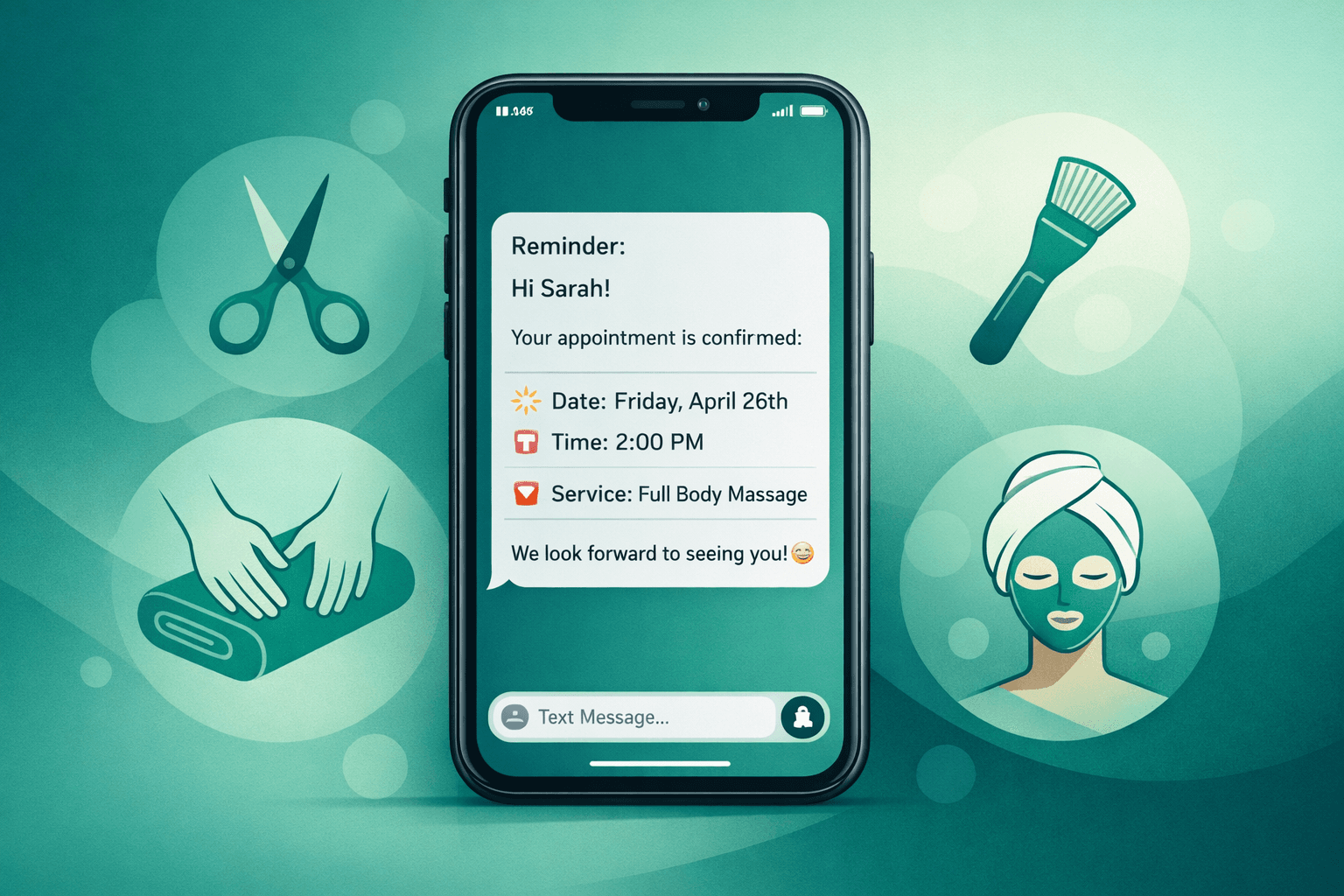
Modern AI systems don't just take messages—they actively book appointments by integrating directly with your CRM. When a client calls to schedule a haircut, the AI checks your stylist's availability, offers time slots, and books the appointment immediately.
The technology has evolved beyond basic chatbots. Today's systems understand context, handle complex scheduling requests ("I need a color touch-up with Sarah, but not on Fridays"), and can even upsell services based on client history.
Natural Conversation Flow
The biggest breakthrough in 2026 has been conversational AI that actually sounds natural. Instead of robotic menu trees, these systems engage in flowing conversations that feel human. They handle interruptions, understand accents and dialects, and can switch between topics seamlessly.
Clients often don't realize they're talking to AI until the conversation ends. A recent survey found that 78% of customers rated AI phone interactions as "good" or "excellent" when they didn't know it was automated.
24/7 Availability Without Overtime
AI never calls in sick, never needs a lunch break, and works nights and weekends without overtime pay. For businesses with clients who book outside traditional hours—busy professionals scheduling during commutes, parents calling after kids' bedtime—this is game-changing.
The Customer Experience Advantage
Consistent Service Quality
Human receptionists have good days and bad days. AI systems deliver the same level of service every single call. They never forget to ask important questions, never sound rushed during busy periods, and always have access to complete client information.
This consistency translates to better customer satisfaction. Businesses using AI phone systems report 23% higher customer retention rates, partly because the booking experience is predictably smooth.
Faster Response Times
AI systems answer immediately—no hold music, no "please wait while I check the schedule." They can handle multiple calls simultaneously, so busy periods don't create bottlenecks.
The average AI booking call takes 2.3 minutes compared to 4.1 minutes for human-handled calls, primarily because AI systems access information instantly rather than navigating through software.
Reduced Human Error
Double-bookings, missed appointments due to scheduling errors, and incorrect client information plague human-managed systems. AI eliminates most of these issues by working directly with your database and following consistent protocols.
Salons using AI report 89% fewer scheduling errors compared to human-managed systems, leading to smoother operations and happier clients.
Making the Transition: What Actually Matters
Integration with Existing Systems
The best AI phone systems integrate seamlessly with popular CRMs like Vagaro, Boulevard, Mindbody, and Fresha. This means your existing client database, scheduling system, and payment processing continue working exactly as before—just with smarter phone coverage.
Look for systems that offer real integrations, not just basic calendar syncing. You want AI that can access client history, preferences, and booking patterns to provide personalized service.
Training and Setup Time
Modern AI systems are designed for quick deployment. Most businesses are fully operational within 2-3 business days, compared to 2-3 weeks needed to recruit, hire, and train human reception staff.
The setup process typically involves configuring your business rules (hours, services, pricing), connecting to your CRM, and recording custom greetings. No technical expertise required.
Cost Comparison That Makes Sense
While a full-time receptionist costs $42,000+ annually, most AI phone systems run $300-$800 monthly depending on call volume and features. That's roughly $3,600-$9,600 per year—a savings of $32,000+ even at the high end.
For most small service businesses, the AI system pays for itself within the first month through improved booking efficiency and reduced missed calls.
The Future Is Already Here
The shift to AI phone systems isn't coming—it's happening now. Early adopters in 2026 are seeing measurable improvements in efficiency, cost control, and customer satisfaction. As the technology continues improving and costs decrease, businesses still relying solely on human reception will find themselves at a competitive disadvantage.
The question isn't whether AI will replace traditional reception models, but how quickly you can adapt to capture the benefits. In an industry where every missed call is lost revenue, AI phone systems have moved from "nice to have" to essential business infrastructure.
Smart business owners are making the switch now, before their competitors do. The technology is ready, the costs make sense, and the results speak for themselves.
FAQ
How do customers react when they realize they're talking to AI?
Most customers don't realize they're interacting with AI during the call. When they do find out afterward, 78% report being impressed with the quality of service. Younger customers (under 40) are particularly receptive, while older customers focus more on efficiency and results than the technology behind it.
Can AI handle complex scheduling requests and special accommodations?
Yes, modern AI systems can handle multi-step booking requests, special timing needs, and service combinations. They access your full service menu and stylist schedules in real-time, so they can accommodate requests like "I need highlights with Maria, but only if she can fit me in before 3 PM next Tuesday."
What happens if the AI system goes down or has technical issues?
Reliable AI phone systems include failover options that automatically route calls to backup numbers or voicemail if the primary system experiences issues. Most providers offer 99.9% uptime guarantees, which is actually more reliable than human staff availability.
How long does it take to set up an AI phone system?
Typical deployment takes 2-3 business days. This includes connecting to your existing CRM, configuring business rules and schedules, and testing the system. Compare this to 2-3 weeks needed to hire and train human reception staff, plus ongoing management time.