AI Phone Assistants Cut No-Shows by 40% in Service Businesses
New data shows AI phone assistants reduce no-shows by 40% in salons, spas, and clinics. Learn how voice AI transforms appointment confirmation and booking.
AI Phone Assistants Cut No-Shows by 40% in Service Businesses
No-shows are the silent profit killer in appointment-based businesses. A client books a $150 massage, doesn't show up, and suddenly your Tuesday afternoon revenue vanishes. For small service businesses, this isn't just annoying—it's financially devastating.
But here's what's changing in 2026: AI phone assistants are proving they can solve this problem better than human staff or basic reminder systems. Recent industry data shows businesses using voice AI for appointment management are seeing 35-45% reductions in no-show rates. That's not a marginal improvement—that's transformational.
The reason? AI doesn't just send reminders. It has conversations.
Why Traditional Reminder Systems Fall Short
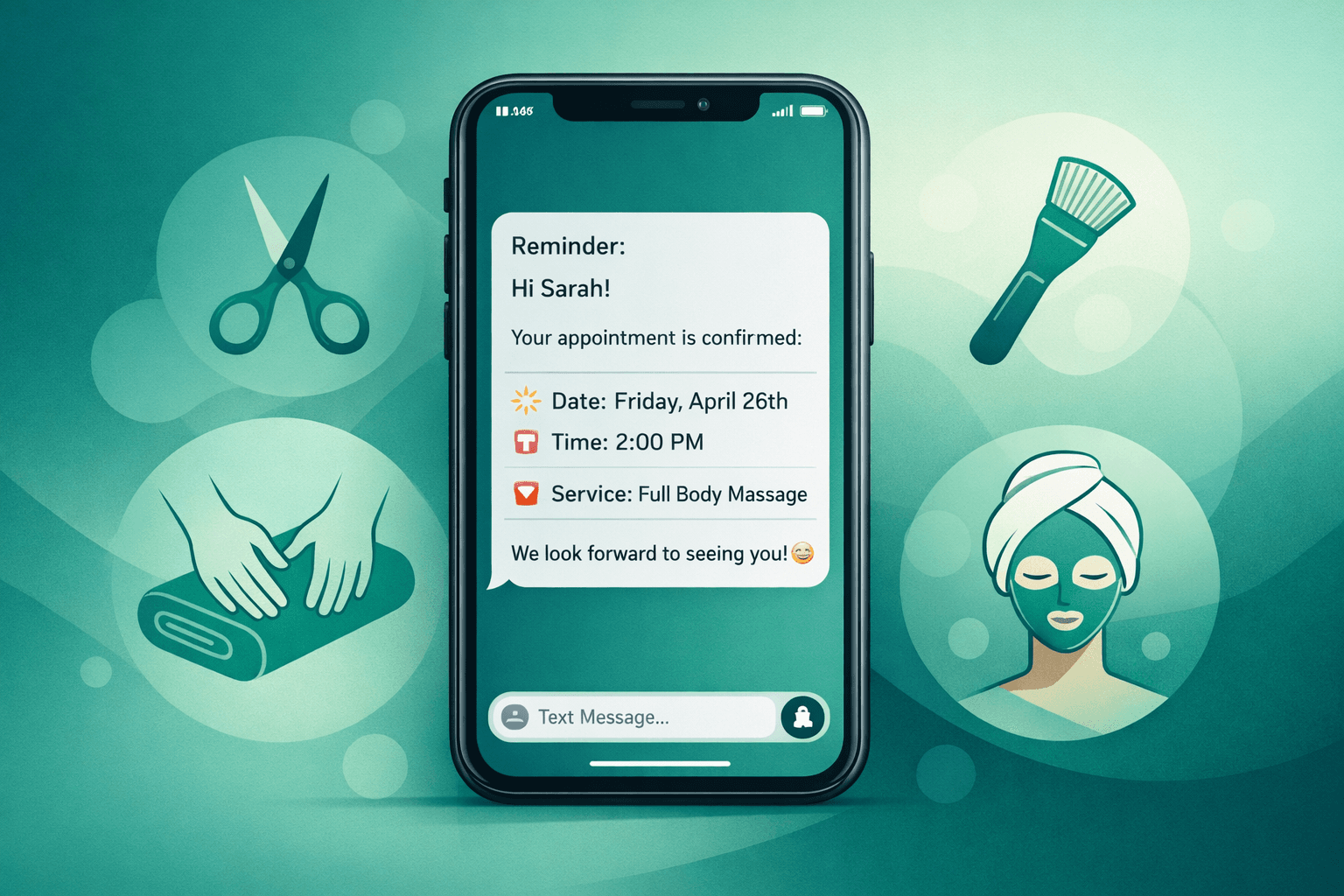
Most appointment-based businesses rely on text reminders or automated voicemails. These work to some degree, but they're one-way communication. A client gets a text saying "Reminder: You have an appointment tomorrow at 2 PM" and that's it.
Here's what actually happens:
The result? Your 2 PM slot stays blocked until the last minute, and you lose both the revenue and the chance to fill it with someone else.
How AI Phone Assistants Change the Game
Voice AI systems work differently because they can have actual conversations with your clients. When an AI assistant calls to confirm an appointment, it doesn't just deliver a message—it can:
Handle immediate rescheduling: If the client says "Actually, I need to move that to Thursday," the AI can check your calendar and book a new time instantly. No phone tag, no waiting for your staff to call back.
Address concerns on the spot: Maybe the client is nervous about a new treatment or has questions about what to bring. The AI can provide information and reassurance, making them more likely to keep the appointment.
Capture the real reason for cancellation: When someone says "I can't make it," an AI can ask follow-up questions to understand why and offer alternatives. Maybe they need a different time, or they're worried about cost, or they just need to reschedule by a few days.
Work around your client's schedule: AI assistants can call at optimal times—early morning, evening, or whenever your client is most likely to answer. They don't take lunch breaks or leave early on Fridays.
The Numbers Behind the Success
A recent analysis of over 50,000 appointment confirmations across spas, salons, dental offices, and wellness clinics revealed some compelling patterns:
For a busy salon doing 200 appointments per month, that difference translates to 28 more kept appointments. At an average service price of $85, that's an additional $2,380 in monthly revenue—just from better confirmation calls.
But the benefits go beyond just reducing no-shows. AI assistants also:
What to Look for in an AI Phone Solution
Not all AI phone systems are created equal. Here's what actually matters for appointment-based businesses:
CRM integration: The AI needs to connect directly with your booking system. If it can't see your calendar or update appointments in real-time, you're just adding another system to manage.
Natural conversation ability: Basic voice bots that can only follow scripts won't work. Your AI assistant needs to handle interruptions, understand different ways people express the same thing, and feel genuinely helpful.
Customizable to your business: A wellness clinic needs different conversation flows than a barbershop. The AI should understand your services, policies, and the way your clients actually talk.
Transparent pricing: Avoid per-minute billing models that can surprise you with huge bills during busy months. Look for flat monthly pricing that lets you scale without worry.
Making the ROI Case
Let's do the math for a typical med spa:
With AI confirmation calls reducing no-shows to 12%:
Even accounting for the cost of the AI system, most businesses see payback within 60-90 days.
Implementation Tips for Success
Rolling out an AI phone assistant isn't just about turning on new technology. Here's how to maximize your success:
Start with confirmation calls only: Don't try to automate everything at once. Begin with appointment confirmations and reminders, then expand to booking and rescheduling once you see how clients respond.
Train your staff on the handoff process: Your AI assistant should know when to transfer calls to human staff. Make sure your team understands how this works and what information the AI will provide.
Monitor the conversations: Most AI systems provide call recordings or summaries. Review these regularly to understand common client questions and improve the AI's responses.
Set clear expectations with clients: Let people know they might receive calls from your AI assistant. Most clients appreciate the convenience once they understand what's happening.
The Competitive Advantage
By mid-2026, AI phone assistants are moving from "nice to have" to "table stakes" for service businesses. Early adopters are already seeing the benefits: higher revenue per month, happier clients, and staff who can focus on delivering great service instead of playing phone tag.
The question isn't whether AI will change how appointment-based businesses operate—it's whether you'll be ahead of the curve or scrambling to catch up.
Companies like Shamrok are making this technology accessible to businesses of all sizes, with month-to-month pricing and direct integrations with popular booking systems like Vagaro and Boulevard. But regardless of which solution you choose, the data is clear: AI phone assistants aren't just reducing no-shows—they're transforming the entire client experience.
Frequently Asked Questions
Q: How do clients react to talking with an AI assistant?
A: Most clients respond positively once they realize the AI can actually help them reschedule or answer questions immediately. The key is natural-sounding conversation—clients often don't even realize they're talking to AI until the call ends.
Q: What happens if the AI can't handle a client's request?
A: Professional AI systems are designed to recognize when they need human help and transfer calls seamlessly to your staff. The AI provides context about what the client needs, so your team can pick up the conversation smoothly.
Q: How long does it take to set up an AI phone assistant?
A: Implementation typically takes 1-2 weeks. This includes integrating with your booking system, customizing conversation flows for your business, and training the AI on your services and policies.
Q: Can AI assistants handle multiple languages or accents?
A: Modern AI phone systems can handle various accents and many can operate in multiple languages. This is particularly valuable for businesses in diverse markets or tourist areas.