Why AI Phone Agents Are Replacing Receptionists in 2026
Discover how AI phone agents are transforming small business operations in 2026. Learn costs, benefits, and implementation strategies for service-based businesses.
Why AI Phone Agents Are Replacing Receptionists in 2026
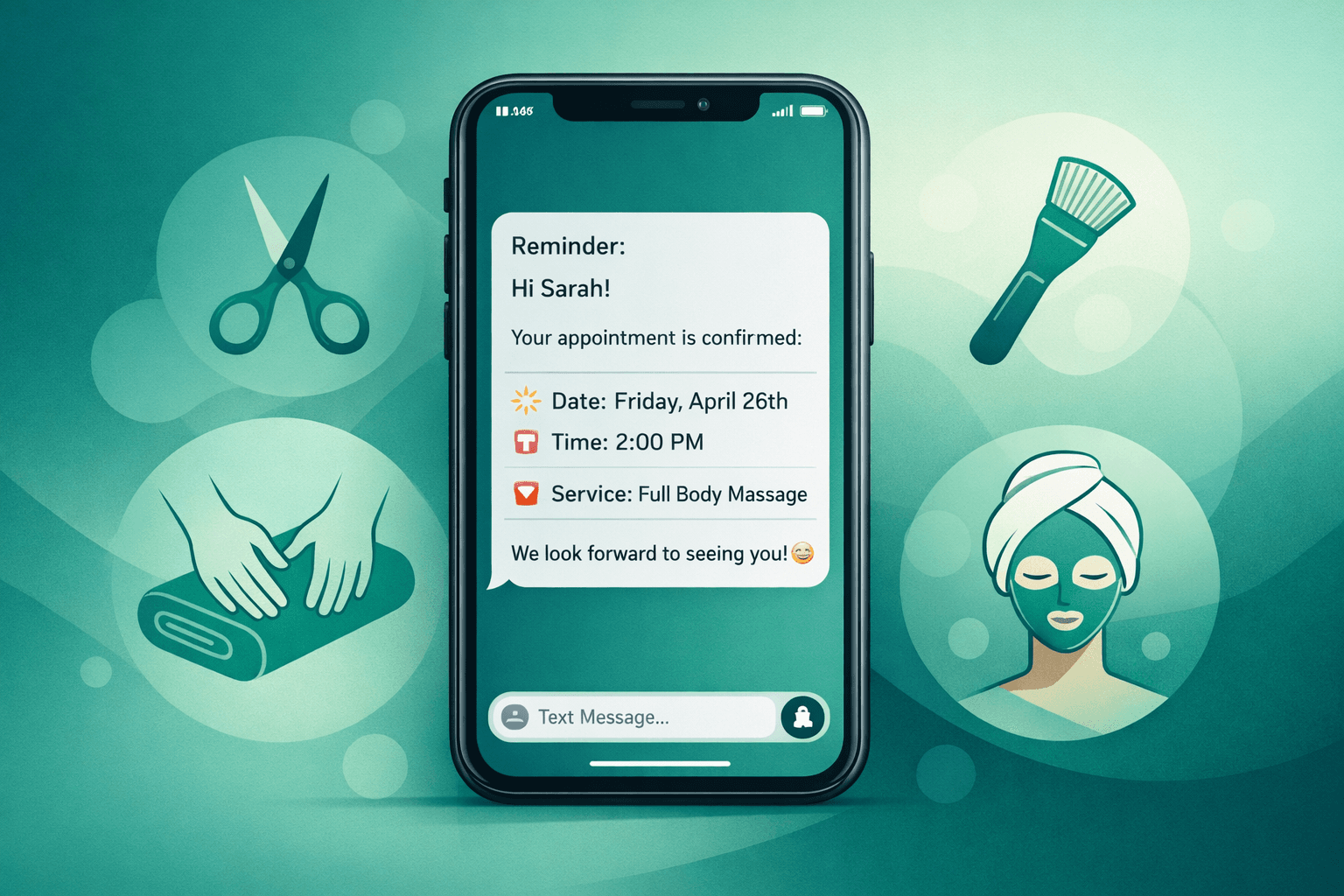
The phone rings at 2 AM. Your spa client needs to reschedule tomorrow's facial because her babysitter canceled. In the past, she'd leave a voicemail and hope you'd catch it before her appointment. Today, she has a complete conversation with your AI phone agent, reschedules for next week, and even books a massage add-on.
This isn't science fiction—it's happening right now in thousands of small businesses across America. According to a recent study by TechValidate, 67% of service-based businesses implemented AI phone systems in the past 18 months, with 89% reporting they'd never go back to human-only reception.
The shift isn't about replacing humans entirely. It's about creating a business that works around the clock, captures every opportunity, and frees your team to focus on what they do best: serving customers face-to-face.
The Numbers Don't Lie: Why Small Businesses Are Making the Switch
Let's talk reality. The average salon loses $2,400 monthly in missed calls, according to industry data from Vagaro's 2026 Business Report. That's nearly $29,000 per year walking out the door because someone couldn't answer the phone during a busy Tuesday rush.
Meanwhile, AI phone agents answer every call in under two rings, 24/7, for about the same cost as hiring a part-time receptionist for 20 hours per week. The math is straightforward:
"We went from missing 15-20 calls per day to missing zero," says Maria Rodriguez, owner of Serenity Spa in Austin. "Our AI handles appointments, cancellations, and even upsells retail products. Last month, it booked $8,000 in services during off-hours alone."
What Today's AI Phone Agents Actually Do
Forget the robotic customer service experiences of 2020. Modern AI phone agents sound natural, understand context, and integrate seamlessly with your existing booking systems. Here's what they handle:
Appointment Management
Customer Service
Revenue Generation
The key difference from older systems? These AI agents understand natural conversation. Clients don't feel like they're talking to a machine.
Implementation: Easier Than You Think
The biggest concern business owners express isn't cost—it's complexity. "Will this mess up my existing systems?" The answer, in most cases, is no.
Modern AI phone platforms integrate directly with popular booking software like Mindbody, Boulevard, and Fresha. Setup typically takes 1-2 weeks, including:
Most providers offer white-glove onboarding, meaning you're not figuring this out alone. Companies like Shamrok handle the technical setup while you focus on training your team for the transition.
The Human Element: What Changes, What Doesn't
Here's what many business owners get wrong: AI phone agents aren't about eliminating jobs. They're about upgrading them.
Your front desk team shifts from answering phones all day to:
"Our staff loves it because they can actually focus on the clients in front of them," explains David Chen, who owns three barbershops in Seattle. "Before, we were constantly interrupting conversations to answer the phone. Now, every interaction is intentional."
ROI Timeline: When the Investment Pays Off
Most businesses see positive ROI within 3-4 months. Here's the typical progression:
Month 1: Learning curve, 60-70% of calls handled by AI
Month 2: System optimization, 80-85% call automation
Month 3: Full integration, 90%+ automation with edge cases to humans
Month 4+: Clear ROI through increased bookings and reduced staffing costs
The businesses that see fastest ROI share common characteristics:
Choosing the Right Solution for Your Business
Not all AI phone systems are created equal. Here's what to evaluate:
Technical Requirements
Business Model Considerations
Trial Period Essentials
Insist on a trial period. Any reputable provider will offer 30 days to test the system with real calls. During this time, monitor:
The Competitive Advantage
By the end of 2026, AI phone agents won't be innovative—they'll be expected. Clients are already accustomed to 24/7 availability from other services. The businesses adapting now gain a 12-18 month head start over competitors.
"Our clients love that they can book at 11 PM on Sunday," says Lisa Park, owner of a wellness clinic in Denver. "We're capturing appointments from people who would have called our competitors during business hours."
The technology has moved past the early adopter phase. It's reliable, affordable, and proven. The question isn't whether to implement AI phone agents—it's whether to lead the transition or follow it.
FAQ
Q: Will customers be able to tell they're talking to AI?
A: Modern AI phone agents sound increasingly natural, but many businesses choose to be transparent. Most customers care more about getting their appointment scheduled efficiently than whether they're talking to AI or a human.
Q: What happens if the AI can't handle a call?
A: Quality systems include seamless handoff to human staff for complex situations. The AI recognizes when it's out of its depth and transfers the call with full context of the conversation.
Q: How long does it take to see results?
A: Most businesses see increased booking rates within the first month. Full ROI typically occurs by month 3-4 as the system handles more call volume and reduces staffing needs.
Q: Can AI phone agents work with any booking system?
A: The best solutions integrate with major platforms like Vagaro, Mindbody, Boulevard, and Fresha. Always verify integration capabilities before committing to a provider.