Small Business AI Burnout: Why 67% Are Scaling Back in 2026
New data shows most small businesses are pulling back from AI tools. Learn why AI fatigue is happening and how to avoid the common mistakes causing burnout.
Small Business AI Burnout: Why 67% Are Scaling Back in 2026
A new study from the Small Business Technology Institute dropped some surprising numbers last week: 67% of small businesses that adopted AI tools in 2024-2025 are now scaling back or abandoning them entirely. The reason? AI fatigue.
This isn't about the technology failing. It's about businesses jumping into AI without a clear plan, getting overwhelmed by options, and burning out on tools that promised to solve everything but delivered confusion instead.
If you're running a small business and feeling skeptical about AI right now, you're not alone. But before you write off AI entirely, it's worth understanding why so many businesses are struggling — and how to avoid their mistakes.
The Three Types of AI Fatigue Hitting Small Businesses
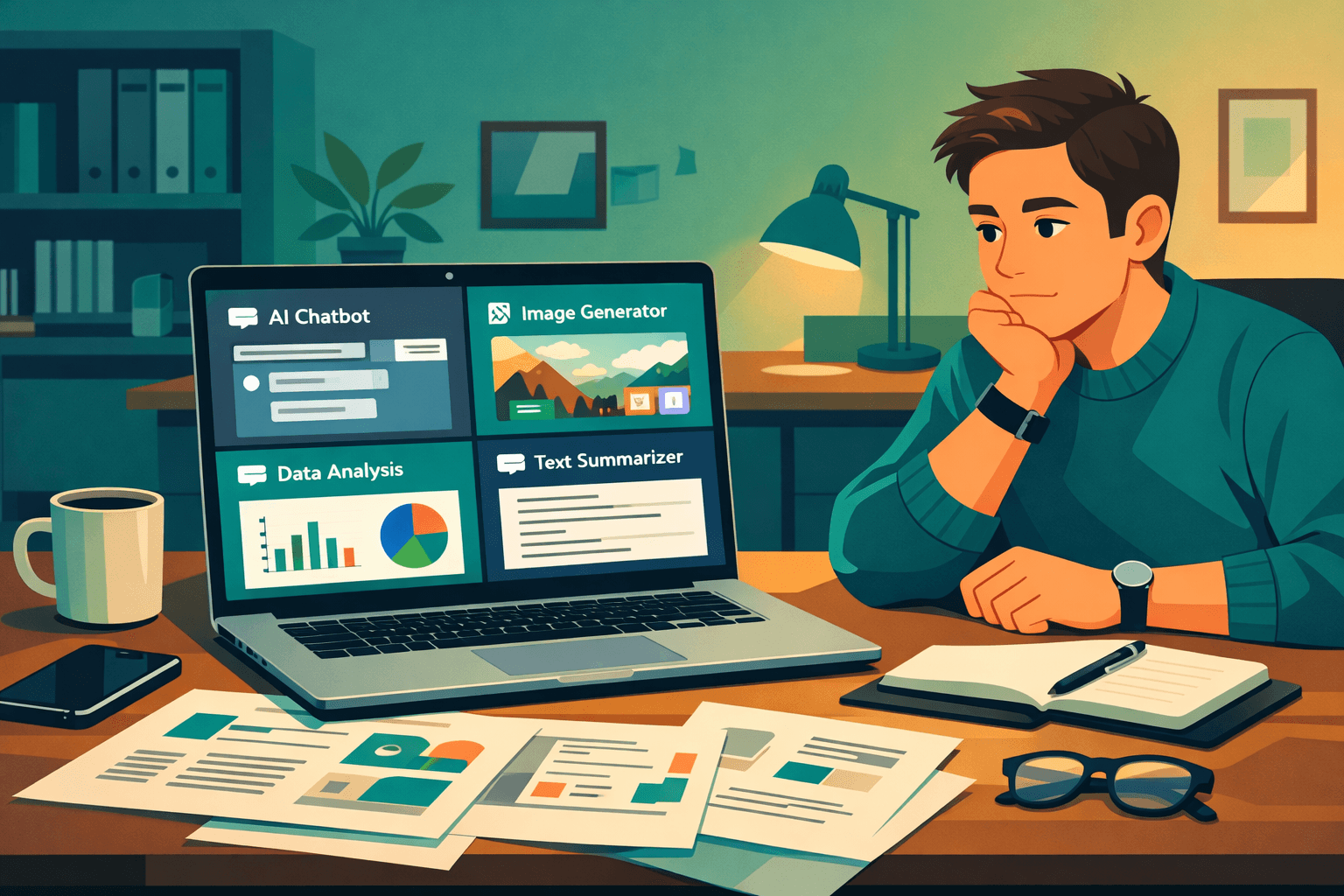
Tool Overload Syndrome
The average small business owner gets pitched 15-20 different AI tools per month. Each one promises to be the "game-changer" (spoiler: they're not). Marketing automation, social media schedulers, chatbots, inventory predictors, customer service assistants — the list goes on.
What happens? Business owners try to implement everything at once. They sign up for multiple tools, spend weeks learning different interfaces, and end up with a Frankenstein tech stack that doesn't talk to each other.
Integration Hell
Most AI tools are built by tech companies for tech companies. They assume you have a dedicated IT person who can handle complex integrations. Small business reality? You're doing it yourself between serving customers and managing payroll.
The result is AI tools that sit isolated from your existing systems. Your AI chatbot can't access your booking calendar. Your marketing automation doesn't know who your actual customers are. Your voice assistant can't update your CRM.
The Promise vs. Reality Gap
AI marketing in 2024-2025 was full of wild promises. "Fully automate your customer service!" "Never miss another lead!" "AI will run your business for you!"
Reality check: AI is a tool, not magic. It needs good data, clear instructions, and ongoing management. When businesses expected AI to work perfectly out of the box, they set themselves up for disappointment.
What Successful Businesses Are Doing Differently
The 33% of businesses that are sticking with AI and seeing real results have a different approach. They're not trying to AI-ify everything at once.
Start with One Clear Problem
Instead of implementing five AI tools, successful businesses pick one specific problem and solve it well. Common starting points:
Choose AI That Integrates with What You Already Have
Smart businesses don't replace their entire tech stack. They add AI that works with their existing booking system, CRM, or POS. For example, if you're already using Vagaro for appointments, look for AI tools that integrate directly with Vagaro rather than trying to replace it.
Set Realistic Expectations
AI won't eliminate all your operational headaches overnight. But it can handle specific, repetitive tasks really well. The businesses seeing ROI are those that view AI as a specialized employee, not a miracle cure.
The 2026 Reality Check: What Actually Works
After two years of AI experimentation, clear patterns are emerging about what works for small businesses and what doesn't.
What's Working
Single-purpose AI tools that do one job exceptionally well. A voice AI that only handles phone calls and booking. A social media AI that only creates posts. A review AI that only manages online reputation.
Direct integrations with existing business software. Tools that plug into your current booking system, payment processor, or CRM without requiring you to change how you operate.
Transparent pricing with clear ROI calculations. Successful AI implementations can show you exactly how much time or money they're saving.
What's Not Working
All-in-one AI platforms that promise to handle everything from marketing to inventory management. These usually do many things poorly instead of one thing well.
Custom AI solutions that require ongoing technical support. Small businesses don't have time to troubleshoot custom code.
AI tools that require major workflow changes. If implementing AI means retraining your entire staff and changing how you serve customers, it's probably not worth it.
How to Avoid AI Burnout in Your Business
If you're considering AI for your business — or if you've tried AI before and got burned — here's how to approach it differently.
The One-Month Test
Before committing to any AI tool long-term, run a one-month pilot. Pick one specific use case (like handling calls during your busiest service times) and measure the results. How many calls did it handle? How many appointments did it book? What was the time savings?
Ask These Questions Before Adopting Any AI Tool
Start Small, Scale Smart
The businesses that are succeeding with AI didn't try to automate everything at once. They started with their biggest pain point, got that working smoothly, then gradually added more automation.
For most service businesses, that first pain point is missed calls. You're busy with a client, the phone rings, and potential revenue walks away. A voice AI receptionist that can book appointments while you're working solves a real, expensive problem.
The Future of Small Business AI
The AI shakeout happening in 2026 is actually healthy. It's separating the useful tools from the hype. Businesses are getting smarter about what AI can and can't do.
Expect to see more specialized AI tools that do specific jobs really well, rather than general-purpose platforms that try to do everything. The focus is shifting from "AI for the sake of AI" to "AI that solves real business problems."
Companies like Shamrok, for example, focus specifically on voice AI for appointment booking rather than trying to be an all-in-one business solution. This specialization means better integration with existing booking systems and more reliable performance for the specific task of handling calls.
Moving Forward: AI That Actually Helps
The AI burnout happening in 2026 doesn't mean AI is bad for small business. It means we're getting past the hype phase and into the practical application phase.
If you've been burned by AI tools before, you're not alone. But don't let past disappointments prevent you from exploring AI tools that are genuinely useful for your specific business needs.
The key is approaching AI like any other business investment: with clear goals, realistic expectations, and a focus on measurable results. Start small, measure everything, and scale only what actually works.
FAQ
Why are so many small businesses abandoning AI tools in 2026?
Most businesses tried to implement too many AI tools at once without a clear strategy. They experienced integration problems, tool overload, and unrealistic expectations about what AI could accomplish immediately.
How do I know if an AI tool is worth trying for my business?
Look for tools that solve one specific, expensive problem you face regularly. The tool should integrate with your existing software and show clear ROI within 90 days. Avoid anything that requires major changes to how you currently operate.
What's the difference between successful and unsuccessful AI implementations?
Successful implementations start small with one clear use case, choose tools that integrate with existing systems, and set realistic expectations. Unsuccessful ones try to automate everything at once and expect AI to work perfectly without ongoing management.
Should I avoid AI completely given the high failure rate?
No, but approach it strategically. The 33% of businesses succeeding with AI are seeing real benefits. The key is learning from the mistakes of the 67% who struggled: start small, focus on specific problems, and choose tools that work with what you already have.