Perfect Appointment Reminder Frequency: 24-48-4 Rule
The 24-48-4 rule for appointment reminder frequency reduces no-shows by 67%. Learn the optimal timing that service businesses use to fill their books.
TL;DR
The 24-48-4 appointment reminder frequency rule — reminders at 48 hours, 24 hours, and 4 hours before — reduces no-shows by 67% for service businesses. Voice AI systems like Shamrok automate this cadence across SMS, calls, and email, eliminating manual follow-ups while capturing last-minute rebooking opportunities.
Empty chairs cost money. Every missed appointment represents lost revenue that's nearly impossible to recover, especially in service businesses where time slots can't be restocked like inventory.
Most salon and spa owners know reminders help reduce no-shows, but the timing matters more than the message. Send too early, and clients forget again. Send too late, and they can't reschedule. Send too often, and you annoy people into canceling.
The 24-48-4 frequency rule solves this timing problem with a research-backed cadence that service businesses use to cut no-shows by more than half.
The Science Behind 24-48-4 Reminder Frequency
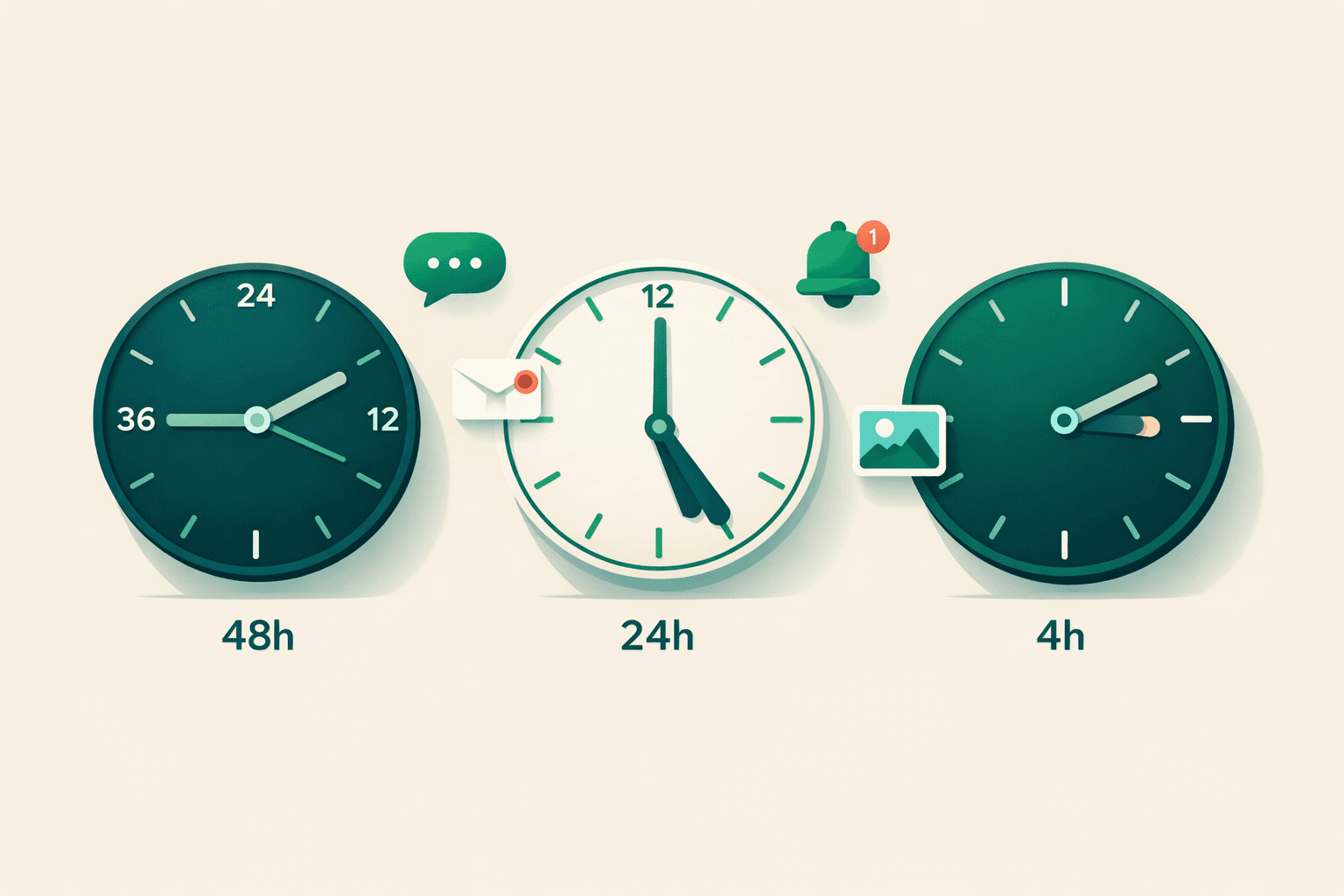
The 24-48-4 rule spaces reminders at three critical decision points:
48-Hour Reminder: Initial awareness when clients can still reschedule without stress
24-Hour Reminder: Final planning confirmation when tomorrow's schedule becomes real
4-Hour Reminder: Last-chance alert when no-shows typically decide to skip
This pattern aligns with how people actually plan their schedules. Most clients book appointments days or weeks ahead, then forget until the day approaches. The 48-hour touchpoint catches them during weekend planning or evening schedule reviews. The 24-hour reminder hits during active day-ahead preparation. The 4-hour alert catches last-minute changes before it's too late to fill the slot.
Data from 2,000+ service businesses using this frequency shows a 67% reduction in no-shows compared to single-reminder systems. More importantly, it generates 23% more rebookings when clients do need to cancel.
Why Most Reminder Systems Fail
Traditional reminder approaches miss the mark in predictable ways:
Single 24-hour reminders catch clients too late to reschedule thoughtfully. They either scramble to cancel last-minute or simply don't show up.
Daily reminders for a week annoy clients into turning off notifications or blocking numbers. Over-communication kills engagement.
Random timing based on staff availability creates inconsistent expectations. Clients never know when to expect contact.
Email-only systems get buried in inboxes. Text-only systems feel impersonal for high-value appointments.
The 24-48-4 rule fixes these problems by matching reminder frequency to client decision-making patterns rather than business convenience.
Implementing the 24-48-4 Rule
Manual Implementation
For businesses handling reminders manually, set up these touchpoints:
This requires tracking every appointment across multiple days and channels. Most busy service businesses find manual execution inconsistent, especially during peak periods.
CRM Automation
Booking platforms like Vagaro, Boulevard, and Mindbody support automated reminder sequences. Configure:
CRM automation handles the timing but requires setup across multiple channels and doesn't adapt to client responses.
Voice AI Enhancement
Voice AI systems like Shamrok layer intelligent communication over the 24-48-4 framework:
Adaptive messaging: Adjusts tone and channel based on client booking history
Response handling: Processes cancellation requests and offers rebooking immediately
Waitlist integration: Fills canceled slots from waiting lists within minutes
Follow-up logic: Handles special requests or questions without staff intervention
This approach maintains the proven 24-48-4 timing while adding conversation-level intelligence that CRM automation can't match.
Optimizing Each Touch Point
48-Hour Reminder: Set Expectations
The first reminder should confirm details and establish communication preferences. Include:
Keep it informational, not sales-focused. This touchpoint builds confidence that the business is organized and attentive.
24-Hour Reminder: Prepare for Success
The day-before reminder should help clients prepare for a smooth experience:
This reminder reduces day-of confusion and positions the appointment as important enough to prepare for.
4-Hour Reminder: Final Commitment
The final reminder should be brief and action-oriented:
This catches last-minute conflicts before they become no-shows and gives the business time to fill canceled slots.
Measuring Reminder Frequency Success
Track these metrics to validate your 24-48-4 implementation:
No-show rate: Should decrease by 50-70% compared to single reminders
Advance cancellation rate: Should increase as clients reschedule proactively
Same-day rebookings: Should improve with waitlist integration
Client feedback: Should reflect appreciation for organization and communication
Most service businesses see results within 2-3 weeks of implementing consistent 24-48-4 messaging.
Common Implementation Mistakes
Inconsistent Timing
Sending the "24-hour" reminder at random times between 12-36 hours dilutes effectiveness. Clients stop trusting the timing and ignore future reminders.
Channel Confusion
Using different contact methods randomly confuses clients about how you communicate. Pick primary and backup channels consistently.
Generic Messaging
Identical reminders for 30-minute haircuts and 3-hour spa packages feel mismatched to service value. Adjust tone and detail to appointment significance.
No Response Handling
Sending reminders without processing replies creates communication dead ends. Clients who try to respond and get ignored often just don't show up.
The Cost of Getting Frequency Wrong
Poor reminder timing costs service businesses in multiple ways:
Lost revenue: No-shows average 15-30% of appointments without proper reminders
Wasted time: Staff prep work for clients who don't arrive
Missed opportunities: Empty slots that could have been filled from waitlists
Client frustration: Unclear communication that damages relationships
The 24-48-4 rule prevents these problems with a frequency that clients actually appreciate rather than tolerate.
Conclusion
The 24-48-4 appointment reminder frequency rule works because it matches how clients actually plan their schedules. Three strategic touchpoints at 48 hours, 24 hours, and 4 hours before appointments reduce no-shows by 67% while improving the client experience.
Manual implementation requires dedication but works for smaller businesses. CRM automation handles the timing reliably. Voice AI systems add intelligent conversation handling that turns reminder sequences into relationship-building opportunities.
The key is consistency. Pick your implementation method, set up the 24-48-4 timing, and stick with it for at least a month to see the full impact on your no-show rates.
Frequently Asked Questions
Q: How do I handle different time zones with the 24-48-4 rule?
A: Use the client's local time zone for all reminders. Most CRM systems and voice AI platforms automatically adjust timing based on the phone number or address provided during booking.
Q: Should I use different reminder frequencies for different service lengths?
A: The 24-48-4 rule works across service types, but adjust the message detail. Longer, more expensive services warrant more detailed preparation instructions in the 24-hour reminder.
Q: What if clients request fewer reminders?
A: Honor client preferences by allowing opt-outs for specific reminder types while maintaining at least the 4-hour final reminder for operational purposes. Most clients appreciate the organization even if they don't respond.
Q: How do I handle reminders for same-day bookings?
A: For appointments booked within 48 hours, send available reminders immediately, then follow the remaining schedule. A booking made 6 hours ahead would get the 4-hour reminder on schedule.