Two-Way SMS Reminders: Why One-Way Texts Fail
One-way SMS reminders inform clients but don't confirm them. Learn how two-way sms appointment reminders cut no-shows and what to pair them with.
Two-Way SMS Reminders: Why One-Way Texts Fail
TL;DR: Sending a reminder is not the same as getting a confirmation. One-way SMS tells clients about their appointment — two-way SMS asks them to respond, and that single shift in mechanics can cut no-shows by a meaningful margin. Here's how it works, what to pair it with, and how voice AI closes the gap when a text goes unanswered.
You've been sending appointment reminders for years. The texts go out, the read receipts pile up, and yet you're still looking at a no-show on the books come Tuesday afternoon. Sound familiar?
The problem isn't that you're sending reminders. The problem is the *kind* of reminder you're sending. Most booking platforms default to a one-way notification — a text that says "Your appointment is tomorrow at 2pm" and then waits for nothing. No reply expected. No confirmation captured. The client either shows or they don't.
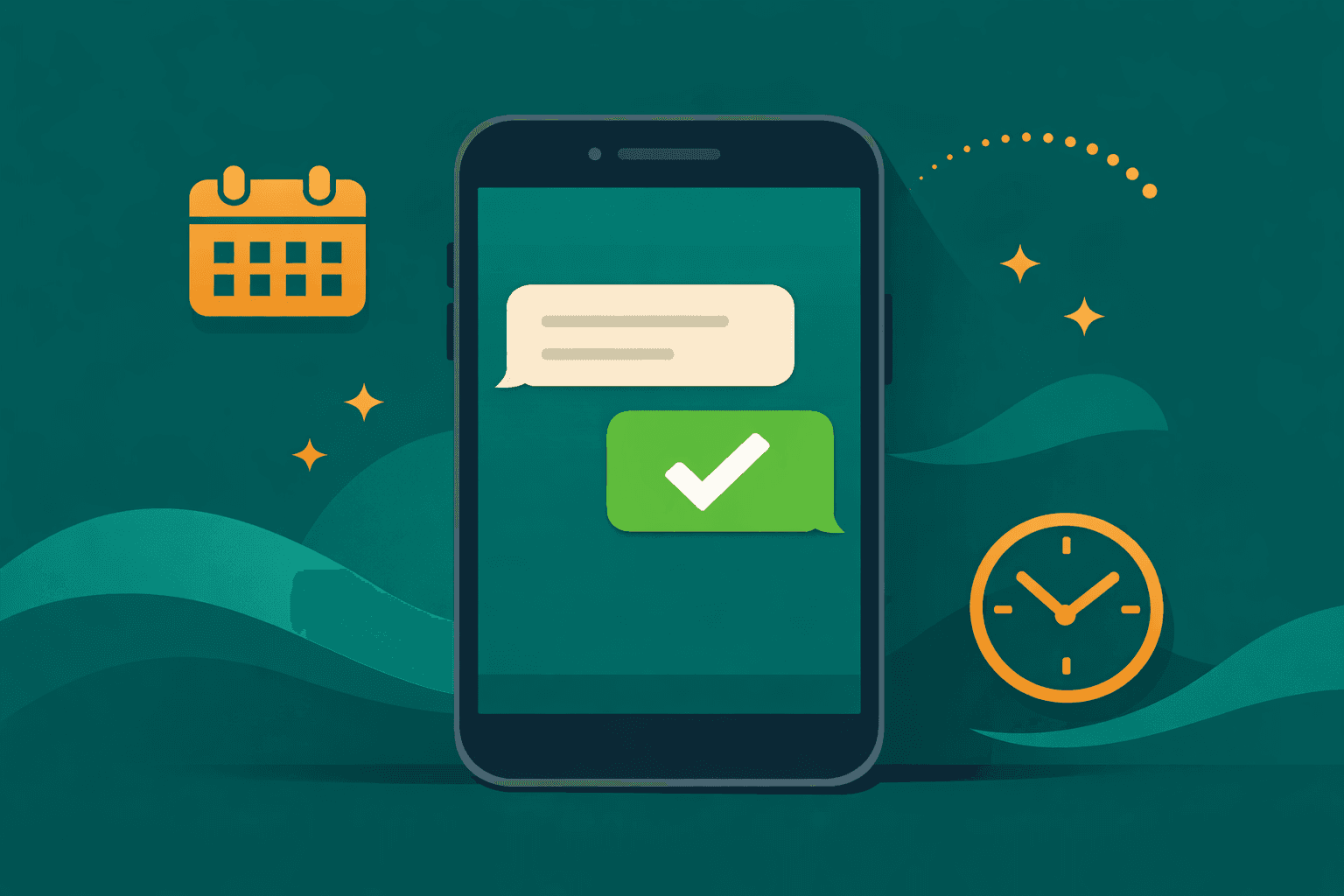
Two-way SMS flips that dynamic. It sends the same reminder, but it asks for a response — a "C" to confirm, a "1" to reschedule — and it actually *does something* with that reply. That distinction is the difference between informing a client and actively managing your schedule.
What One-Way SMS Reminders Actually Do
One-way reminders aren't useless. They surface the appointment in a client's mind, which is better than radio silence. But they have a structural blind spot: they treat confirmation as implied.
When a client reads "Your appointment is tomorrow at 2pm," one of three things happens:
Outcome two and three are your no-shows. And one-way reminders have no mechanism to distinguish between a confirmed client and a ghost.
The other issue: one-way texts keep your front desk in the dark. Your team doesn't know who's actually coming until clients walk through the door — or don't.
How Two-Way SMS Changes the Equation
Two-way SMS introduces a response loop. The client gets a prompt — "Reply C to confirm or R to reschedule" — and the system listens. What happens next is where the real value lives.
When a client confirms:
When a client replies to reschedule:
When a client doesn't reply at all:
This is exactly where voice AI steps in.
The Silent Client Problem: What Voice AI Handles That SMS Can't
Two-way SMS covers the clients who respond. It doesn't cover the ones who read the text, mentally shrug, and keep scrolling. That gap — unconfirmed appointments sitting on your books 12 to 24 hours out — is where no-shows actually live.
Shamrok's voice AI fills that gap automatically. When a client hasn't confirmed by a configurable threshold (say, 20 hours before their appointment), the system triggers an outbound call. Not a robocall. An actual conversational AI that can:
Your front desk doesn't dial. They don't leave voicemails that never get returned. Shamrok handles the outreach, and the booking record updates automatically.
This matters especially for high-value services — a 90-minute facial, a keratin treatment, a med spa consultation — where a no-show isn't an annoyance, it's $150 to $400 of protected time that evaporates.
Building a Two-Way + Voice AI Reminder Stack
The most effective no-show prevention isn't a single touch — it's a layered sequence that catches clients at different stages of their decision window. Here's a structure that works:
72 Hours Out — Informational SMS
Send a soft reminder with appointment details. No action required. This surfaces the appointment before the client has made any conflicting plans.
*"Hi [Name], just a heads-up — you're booked with us on Friday at 3pm for [Service]. Questions? Reply here or call us."*
48 Hours Out — Two-Way Confirmation SMS
This is the active confirmation ask. Keep it short, make the action obvious.
*"Hi [Name], confirming your Friday 3pm appointment. Reply C to confirm or R to reschedule."*
Platforms like Vagaro, Mindbody, and Boulevard all support two-way SMS natively — the confirmation status syncs directly to the appointment record.
20–24 Hours Out — Voice AI Follow-Up for Non-Responders
Anyone who hasn't replied to the 48-hour text gets an outbound call from Shamrok. The AI confirms, reschedules, or logs the attempt. If the slot opens up, your waitlist process kicks in immediately.
Day-Of — Final SMS Reminder
Short, logistical, no ask required.
*"See you today at 3pm! [Business Name] is at [Address]. Text us if anything changes."*
This four-touch sequence addresses every behavioral type: the planner who confirms immediately, the busy client who responds when prompted, and the ghost who only picks up a call.
Platform Notes: Two-Way SMS Support in 2026
If you're on one of the major booking platforms, here's what you're working with:
Shamrok integrates with all of these. When voice AI handles the follow-up call, the outcome — confirmed, rescheduled, or no-response — writes back to the appointment record in whatever platform you're already using. Nothing lives in a silo.
What This Actually Looks Like on a Monday Morning
Let's be concrete. You run a salon. You have 14 appointments on the books for Tuesday. Your current setup sends a one-way reminder at 9am the day before — that's it.
With a two-way + voice AI stack:
That's the difference between hoping your Tuesday fills in and actually knowing it will.
Conclusion
One-way SMS reminders do one job: they inform. Two-way SMS reminders do a better job: they confirm. But neither one handles the client who goes quiet — and that's where most no-shows actually come from.
The complete answer is a layered system: two-way text for the responders, voice AI follow-up for the silence, and a booking platform integration that keeps your schedule accurate in real time. Shamrok is built to be that last layer — the one that closes the loop when a text alone can't.
If you want to see how the outbound call flow works with your current booking setup, book a quick demo at shamrok.com/demo.
Frequently Asked Questions
What is a two-way SMS appointment reminder?
A two-way SMS appointment reminder is a text message that prompts the client to reply — typically to confirm or request a reschedule. Unlike one-way reminders that only deliver information, two-way reminders capture a response and update the appointment status in your booking platform automatically.
Do two-way SMS reminders actually reduce no-shows?
Yes, but with a caveat: they reduce no-shows among clients who respond. The clients who ignore the text still represent a risk. That's why pairing two-way SMS with a voice AI follow-up for non-responders is the most effective approach — it addresses both the responsive and the silent segments of your client list.
Which booking platforms support two-way SMS in 2026?
Vagaro, Boulevard, Mindbody, Mangomint, and Jane App all support two-way SMS with confirmation tracking as of 2026. Feature availability and plan requirements vary by platform, so check your current subscription tier for specifics.
How does Shamrok work with two-way SMS reminders?
Shamrok doesn't replace your booking platform's SMS — it layers on top of it. When a client hasn't confirmed via text by a set threshold before their appointment, Shamrok places an outbound voice call to follow up. The outcome of that call writes back to your booking record, keeping your schedule accurate without manual intervention from your front desk.